


Beyond Information Operations: The Rise of Operations in the Information Environment (OIE)
“Lahore Port Destroyed” remains one of the more amusing memes associated with the May 2025 Pakistan-India conflict. Since, Lahore is a city deeply embedded in the historical imagination of Muslims, Sikhs and Hindus alike; its geography is well known to populations on both sides of our eastern border: being a hinterland city, it has no port. Yet, a more puzzling question to me, was not the absurdity of the claim itself, but how such a glaringly false reporting emerged from one of the world’s largest and most sophisticated media ecosystems. Something didn’t seem right.
A year later, I happened to listen to several veterans and dignitaries revisiting Marka-e-Haq / Bunyan-un-Marsoos and discussing future contingencies in 1st week of May 2026. Several of such contingencies revolved around India’s Dynamic Response System (DRS) cycles with an objective of “discrediting the Armed Forces of Pakistan.” However, discussions consistently emphasized strike planning, kinetic actions, and physical effects. In all practical terms, information domain was largely treated as a side line or post-action messaging. “Discredit” is not a physical outcome; it is a cognitive one. The battleground, therefore, lies in perception, legitimacy and audience interpretation.
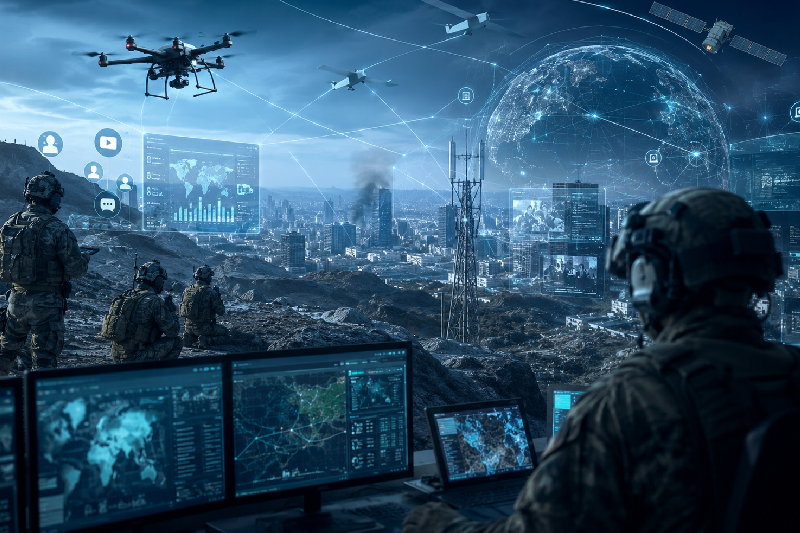
The aforesaid repeatedly led me to wonder whether our operational imagination still remains rooted in treating information as a ‘capability-in-itself’? On the other hand, operations today increasingly unfold within a virtual information environment that shapes operational possibilities and requires plans to be adjusted accordingly – just as it is done for terrain, sea state, and weather.
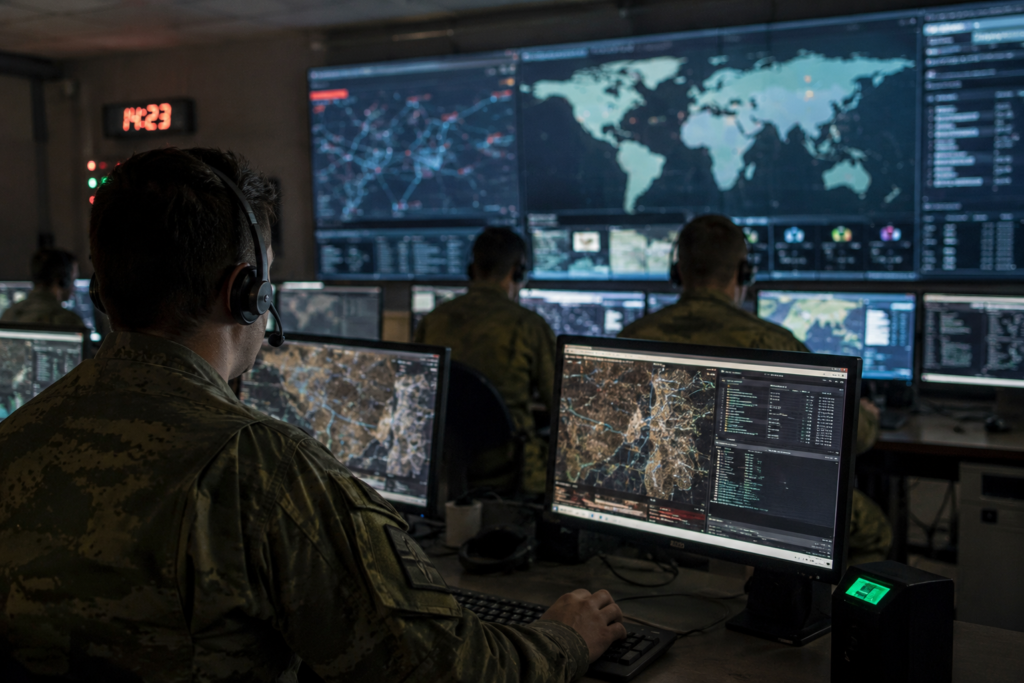
This distinction becomes important because much of contemporary military thinking on information conflict still draws upon legacy Information Operations (IO) frameworks, particularly those reflected in Joint Publication, JP 3-13, which was published in 2012. Under this logic, information is often conceptualized as a capability-in-itself – one among several instruments employed to support operational objectives through psychological operations, military deception, cyberspace activities, electronic warfare and public affairs. In essence, military action remains primary, while informational efforts are synchronized to support, reinforce or communicate operational success.
However, an important doctrinal shift has quietly occurred. In JP 3-04, titled, “Information in Joint Operations” published in Sep 2022, the US DoD coined a new term, “Operations in the Information Environment” (OIE). Moreover, the term ‘Information Operations’ was explicitly removed from the DoD Dictionary (JP 3-04. Pg GL-5, para 2), alongside related concepts such as information-related capability and information superiority. While the functional activities themselves persist, the discontinuation of the IO terminology suggests a broader reconsideration of how information is being conceptualized in contemporary operations. Table 1 presents some of the key conceptual differences (in simplified form) relevant to operational planning.
| Aspect | JP 3-13 (Revised 2014) | JP 3-04 (Published 2022) |
|---|---|---|
| Core View of Information | Information as a capability-in-itself. | Operations unfold within an information environment. |
| Planning Emphasis | Employ informational capabilities. | Understand and adapt to the information environment. |
| Relationship with Military Action | Information synchronized in support of operations. | Military action synchronized with environmental information dynamics. |
| Operational Logic | Action → Information Support/Message. | Action ↔ Perception ↔ Environment Interaction. |
| Planning Question | How should information support the operation? | How might the information environment impact or shape the operation and operational choices? |
| Communication Setting | Predominantly one-way. | Multi-directional and networked. |
| Assessment Focus | Operational and military outcomes. | Perception, legitimacy, and operational implications. |
| Typical Risk | Disconnect of narrative from realities and credibility. | Narrative connected to operations but extending beyond realities. |
| Best Suited For | Structured military environments. | Digitally contested environments. |
This doctrinal shift from IO to OIE occurred against the backdrop of a changing character of conflict. In highly networked and digitally mediated settings, operational outcomes are no longer interpreted after the fact; they are continuously contested, amplified, reframed and sometimes fabricated in real time. Information no longer flows predominantly in one direction from state to audience. Rather, perceptions increasingly emerge through interaction between military actions, audiences and digital ecosystems. Consequently, battlefield effectiveness alone, does not guarantee strategic legitimacy; requiring military operations to be increasingly understood and planned within the information environment itself.
It is perhaps within the above mentioned context that emerging doctrinal thinking surrounding the OIE deserves attention – not necessarily as a ready-made solution, but as an invitation to rethink assumptions. Unlike earlier approaches that often treated information as a discrete capability to support operations, OIE places greater emphasis on understanding the information environment itself and synchronizing military activity accordingly. The central question subtly shifts from “How should information support the operation?” to “How might the information environment shape the operation itself?” A student planning under a legacy IO lens may primarily ask how informational tools can reinforce operational success. By contrast, a planner exposed to OIE-oriented thinking may begin by asking how audiences, narratives, timing, media ecology and anticipated perceptions could shape the viability and consequences of military action itself.
Let’s revisit the “Lahore Port Destroyed” claim through an OIE lens. The claim became a meme not only because it was false, but because it violated the credibility boundaries of the information environment itself. Under a legacy IO approach, such messaging may be treated as an informational activity supporting operational aims, even at the risk of disconnect from material realities. An OIE-oriented approach begins instead from the environment itself – how credibility, interpretation, and consequence are shaped before messaging is even produced.
Also read this: MKE TOLGA Wows 24-Nation Delegation in Live-Fire Air Defence Demo
Could the OIE mindset have prevented mistakes like ‘Lahore Port’? I cannot say for sure. However, what I can say is that something increasingly feels insufficient in how we think about information during conflict. Perhaps I am wrong, or perhaps OIE is not the answer, or only part of it. Yet, if military operations are envisioned to unfold within an increasingly contested, more complicated, information environments; then perhaps the custodians of Pakistan’s PME must at least begin asking whether teaching IO alone remains sufficient for the operational realities, our military officers may actually face.
AUTHOR:
Zaeem Shabbir is an aerospace engineer. His interdisciplinary research bridges defence/strategic studies with aerospace engineering.
Catch all the latest defense news from around the world—join us on
Facebook, Twitter, YouTube, Instagram & TikTok.