



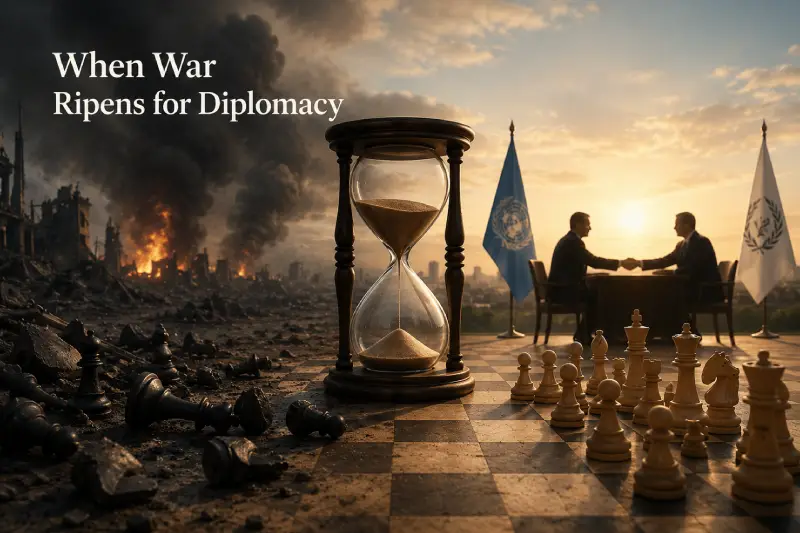
US-Iran Negotiations: When War Ripens for Diplomacy Through Pakistan
Trust isn’t a precondition to diplomacy; rather, diplomacy starts when one can no longer afford the alternatives. And that’s what makes the current US-Iran Negotiations through Pakistan so important. The ongoing negotiations and the temporary ceasefire between America and Iran, is not solely because these two enemies are close to finding peace in some sentimental way, or they share values between them, rather it is because that they may be at the point where the price of continued military action is no longer more desirable than negotiating a settlement.
The lack of agreement regarding sanctions, nuclear issues, the terms of de-escalation, and ongoing public posturing by both parties, while keeping channel open for negotiations, has made the geopolitical situation in the gulf region more complex.
Why Are US-Iran Negotiations Important?
However, renowned realist International Relations theorist, Hans. J Morgenthau provides a clearer framework for understanding this complex geopolitical situation in the Gulf. Morgenthau’s traditional realist philosophy at the time he wrote was stark and unemotional. According to Morgenthau, the objectives of the state should be proportional to its power. He further postulates that the leadership of a state should also understand the objectives and power of the adversary.
Hans Morgenthau’s Realist Theory of Diplomacy
The statesmen must determine, where there can be an agreement between the two states, especially when they are in state of war. Deploying the right means to protect vital interests and be willing to settle for something less important is also a major hallmark of Morgenthau’s writings. His message to diplomats was simple: When states make each dispute either a fight for upward or downward social status, there are ‘NO’ settlements. There is not much left of the concept of international diplomacy when all disputes fall into an “absolute” category.
The insight provided above goes far beyond being mere ‘academic window dressing.’ At its core, it touches upon the fundamental reason why wars come to an end. Morgenthau recognized that the function of diplomacy is not to create harmony but to avert catastrophe by converting raw power into viable forms of political arrangement. The U.S. and Iran are presently experiencing a difficult moment at the diplomatic front.
The U.S. is still seeking durable limits on Iran’s nuclear capabilities and regional activity, while Iran is still pursuing a relief from sanctions, recognition of sovereign authority. Thus, both remain committed to achieving each of their respective goals but also are attempting to determine whether they can gain additional benefits between themselves.
William Zartman’s Ripeness Theory
In addition to Morgenthau. William Zartman’s notion of ‘ripeness moment’ provides clarity on how and why negotiations occur. He believes that conflicts become negotiable when parties view themselves to be at a mutually hurting stalemate, where neither side can have a decisive victory. While ripeness is not necessarily the same as peace, it is politically recognized that the current modality of engagement is more costly than a negotiated compromise.
Additionally, Zartman parallels this point by stating that, just because there is a ripe time to negotiate, it does not mean that a negotiation will occur, unless an appropriate timeframe for negotiations exists, which may include a seeking of assistance from mediators.
Why the Current Conflict Has Reached a Diplomatic Stage
An examination of the current state of the war and the economic fallout from the Hormuz crisis reveals that conditions are now right for the two sides to enter into a diplomatic process to peacefully resolve their problems. The inability of either side to impose their political will on the other has resulted in a situation that meets the definition of a mutually hurting stalemate. The United States can escalate the conflict, however, escalating the conflict does not equal a settled political solution.
While Iran can inflict cost to the United States, this comes at the expense of increasing Iran’s own strategic isolation and vulnerability. Both parties can inflict damage or pain on each other; however, neither party has demonstrated that they have a reliable way to achieve a decisive victory. It is often at this time when taking diplomatic steps towards peace no longer appears to be a sign of weakness but instead becomes a sign of strength.
Pakistan has hosted and facilitated the negotiations and the Field Marshal Asim Munir, and the rest of the Pakistani leadership acted as intermediaries between both groups, as well as being able to interact with other regional actors such as Saudi Arabia, Turkey, and Qatar. This does not merely mean that Pakistan had a “symbolic” role in the negotiations; rather, it means that the mediators play an essential role according to mediation theory.
They reduce transaction costs, clarify signals, create face-saving solutions for both parties, stop tactical misreadings from turning into strategic breakdowns, and provide a means for adversaries to test small concessions without losing their pride. In other words, they change pain into processes.
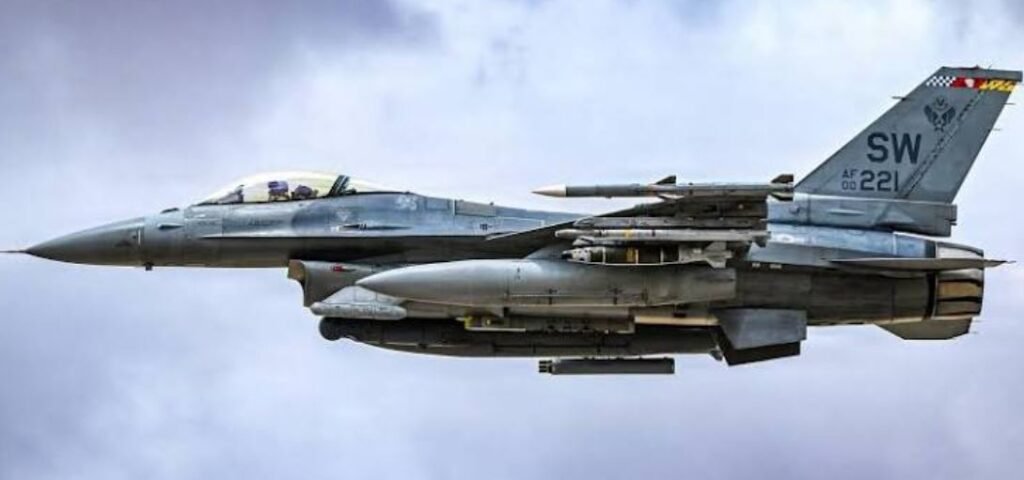
Although Pakistan may seem to be a neutral third-party mediator on the surface, the nature of its involvement with each party is of special interest to both international relations experts as well as lawyers. Pakistan has shown significant diplomatic and military credibility specifically after defeating the so called, ‘Net security provider’, in May 2025. Durable diplomacy could only come from an analysis of the actual power relationships of each potential participant and not an assumed neutrality of them.
Thus, Pakistan’s ability to facilitate mediation comes also from its geostrategic location, which allows it to gain the trust of the parties involved in the conflict as a legitimate mediator. As Relevance plays a more important role in diplomacy than purity.
Also read this: Global Conflict and Rising Pressure: Karachi Port in the Age of War-Driven Shipping
In any mediation situation there is a limit on what mediation can achieve. The key question is whether the parties can isolate essential interests from their negotiating positions. If Washington insists that Iran’s concessions must represent a complete strategic capitulation, then there will be a failure of diplomacy. Likewise, If Tehran sees compromise as humiliation rather than statecraft, then there will also be a failure of diplomacy.
The point Morgenthau made is that the process of achieving peace requires discrimination in the sense of being firm on essential issues, while flexible and understanding over symbolic matters. No two states ever emerge from a war with all their individual interests intact.
As a result, the significance of US-Iran Negotiations is less about reconciling with each other, and more about showing that a war between the two nations has transitioned to a political negotiation stage, where there is a possibility of peace through diplomacy. Because as of now, it is now too expensive, uncertain and without any strategic value to continue using violence.
Ripeness has allowed for that moment, and the government of Pakistan has officially formalized it. It ultimately depends on the two countries if they can rise to the challenge and demonstrate the most difficult diplomatic skill: to distinguish between an extremely charged, maximalist position and a country’s national interest. Wars seldom conclude based on morality but rather with political realities; Morgenthau’s views remain valid in this case.
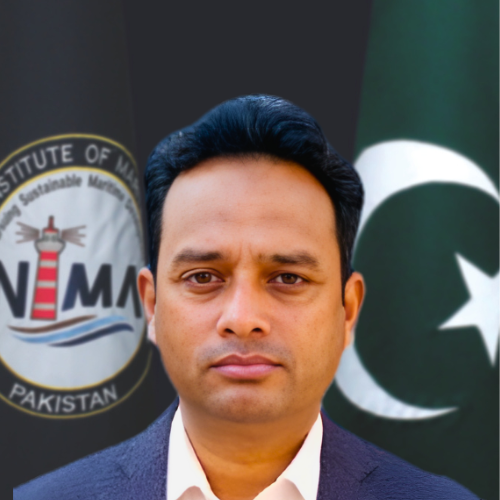
Nasir Imtiaz
Research Associate
The author is a Research Associate at the National Institute of Maritime Affairs (NIMA), and can be reached at nasirimtiaz78600@gmail.com.
Catch all the latest defense news from around the world—join us on Facebook, Twitter, YouTube, Instagram & TikTok.