








Pakistan GIDS Unveils SMASH Hypersonic Missile at WDS 2026
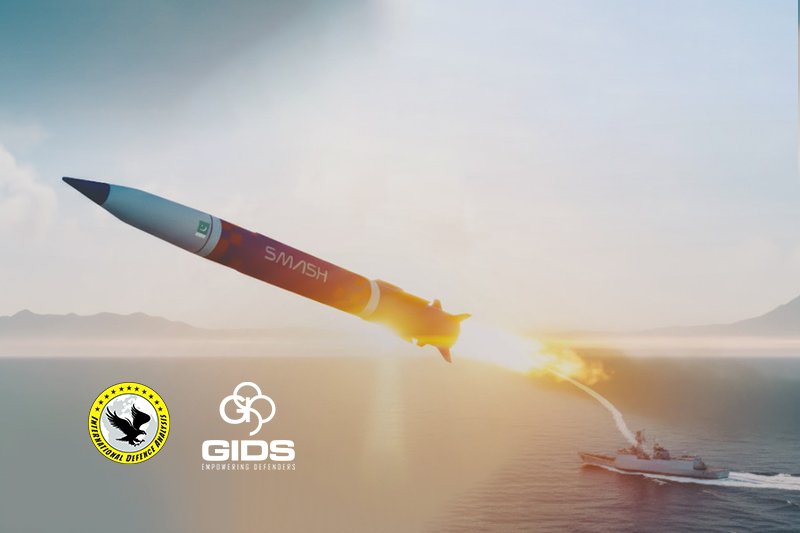
The World Defence Show 2026 witnessed a groundbreaking moment as Pakistan’s Global Industrial Defence Solutions (GIDS) unveiled the country’s first hypersonic missile system. The SMASH represents a significant leap forward in Pakistan’s maritime defense capabilities, marking the nation’s entry into the exclusive club of countries possessing hypersonic weapons technology.
Understanding the SMASH Hypersonic Missile System
The SMASH hypersonic missile is a dual-purpose weapons system designed to engage both naval and land-based targets with unprecedented speed and accuracy. Unlike conventional cruise missiles, this advanced weapon system employs a ballistic trajectory combined with hypersonic speeds during its terminal phase, making it exceptionally difficult to intercept.
What sets this system apart is its versatility. The SMASH operates in two distinct configurations: an anti-ship variant for maritime engagements and a land-attack version for striking ground targets. Both configurations share several core characteristics while being optimized for their specific mission profiles.
Technical Specifications:
SMASH Anti-Ship Configuration
The maritime variant of the hypersonic missile is specifically engineered to neutralize naval threats. With an operational range of 290 kilometers, it carries a unitary blast or blast-fragmentation warhead weighing 384 kilograms. The missile achieves terminal velocities exceeding Mach 2, utilizing a sophisticated guidance package that combines High-Grade Navigation Satellite System (HOGNSS) assisted Inertial Navigation System (INS) with an active radar seeker for terminal homing.
Powered by a single-stage dual-thrust solid rocket motor, the anti-ship variant achieves a circular error probability (CEP) of just 10 meters, ensuring high-precision strikes against moving naval targets. The near-vertical attack profile during the terminal phase significantly reduces the target’s reaction time and complicates defensive countermeasures.
SMASH Land Attack Configuration
The land-attack variant extends Pakistan’s strike capabilities deep into adversarial territory. Maintaining the same 290-kilometer range, this version carries a heavier warhead of 444 kilograms optimized for unitary blast or blast-fragmentation effects against fixed ground installations and infrastructure.
ALSO READ: Pakistan Navy’s Successful Test of P282 Smash Ballistic Missile
While it employs a similar propulsion system and maintains terminal speeds above Mach 2, the land-attack configuration relies solely on HOGNSS-assisted INS guidance, achieving a CEP of 15 meters. This slight reduction in precision compared to the anti-ship variant is acceptable for land targets, which are typically stationary and larger in profile.
Strategic Implications for Regional Maritime Security
The introduction of the SMASH hypersonic missile fundamentally alters the strategic balance in the Arabian Sea and wider Indian Ocean region. As a cornerstone of Pakistan Navy’s anti-access and area-denial (A2/AD) strategy, this weapon system creates significant operational challenges for potential adversaries seeking to operate within Pakistan’s exclusive economic zone.
The 290-kilometer engagement envelope allows Pakistan to establish a robust defensive perimeter around its coastline and critical maritime assets. Combined with existing coastal defense systems and naval platforms, the SMASH creates overlapping layers of defense that complicate enemy operational planning.
Platform Integration and Deployment Flexibility
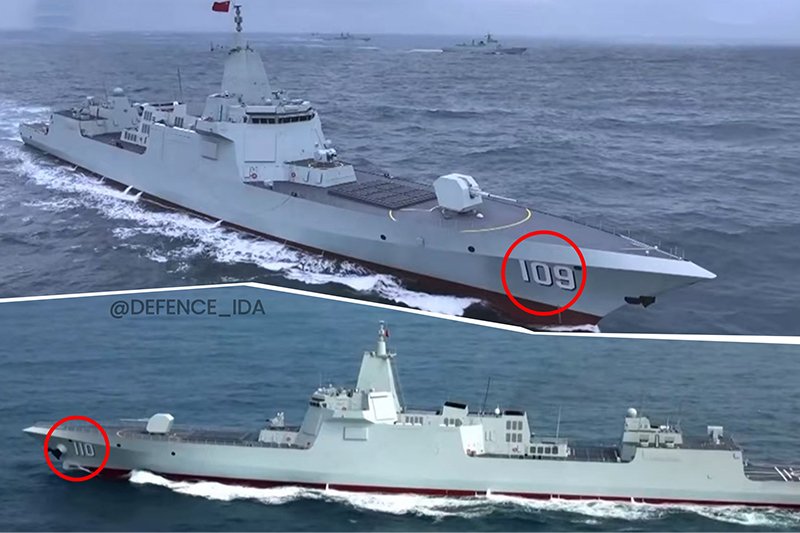
Reports from WDS 2026 indicate that the SMASH has been successfully integrated with the Zulfiquar-class (F-22P) frigates currently serving in the Pakistan Navy. This surface-ship deployment demonstrates the system’s adaptability and suggests potential for wider integration across Pakistan’s naval fleet.
Beyond naval vessels, defense analysts speculate that land-based mobile launchers could provide additional flexibility, allowing rapid repositioning to address emerging threats. The modular design philosophy suggests that future platforms, including the upcoming Jinnah-class frigates, could incorporate this capability as standard equipment.
There’s also speculation regarding aerial and submarine-launched variants. The Pakistan Navy’s reported work on the P282 air-launched ballistic missile, described as a hypersonic missile platform compatible with Sea Sultan maritime patrol aircraft, indicates a comprehensive approach to multi-domain strike capabilities.
Comparative Analysis: SMASH and CM-302
The SMASH represents Pakistan Navy’s second supersonic anti-ship weapon, complementing the Chinese-origin CM-302 supersonic cruise missile acquired with the Tughril-class (Type 054A/P) frigates. While both systems achieve supersonic speeds, their operational profiles differ significantly.
The CM-302 employs a supersonic-cruising flight profile throughout its trajectory, maintaining high speeds from launch to impact. In contrast, the SMASH follows a ballistic trajectory before accelerating to hypersonic speeds during its terminal approach. This difference in flight profiles means that adversary air defense systems must contend with varied threat vectors, complicating defensive responses.
By maintaining a diverse arsenal that includes subsonic cruise missiles, the supersonic CM-302, and now the ballistic SMASH, Pakistan Navy forces potential adversaries to deploy and coordinate multiple defensive systems simultaneously, straining integrated air defense networks.
Technological Achievement and Indigenous Development
The development and deployment of the SMASH hypersonic missile represents a significant milestone in Pakistan’s defense industrial base. While some components may leverage international collaboration, the successful integration and testing of such an advanced weapons system demonstrates growing indigenous capabilities in missile technology, guidance systems, and materials science.
The dual-thrust solid rocket motor technology represents particular advancement, providing the initial boost required for the ballistic trajectory while maintaining sufficient propellant for the terminal acceleration phase. This propulsion solution balances range requirements with the need for high terminal velocities.
Future Prospects and System Evolution
As Pakistan continues refining its hypersonic missile capabilities, several evolutionary paths appear likely. Incremental improvements in guidance accuracy, extended range variants, and alternative warhead options could emerge as the platform matures. Integration with newer naval platforms and potential development of submarine-launched variants would further enhance strategic flexibility.
The convergence of the SMASH program with the P282 air-launched initiative suggests a comprehensive approach to hypersonic strike capabilities across multiple domains. Should these programs successfully integrate, Pakistan would possess one of the region’s most diverse hypersonic arsenals, spanning surface, air, and potentially subsurface launch platforms.
The unveiling of Pakistan’s SMASH hypersonic missile at WDS 2026 marks a transformative moment in regional defense dynamics. With its combination of speed, precision, and versatility, this weapons system significantly enhances Pakistan’s maritime defense posture and A2/AD capabilities.
As nations across the globe race to develop and deploy hypersonic weapons, Pakistan’s successful development of the SMASH demonstrates that advanced military technologies are no longer the exclusive domain of major powers. The strategic implications of this development will undoubtedly influence regional security calculations and naval operational planning for years to come.
The SMASH hypersonic missile stands as testament to Pakistan’s commitment to maintaining credible deterrence while protecting its maritime interests in an increasingly complex security environment.
Catch all the latest defense news from around the world—join us on Facebook, Twitter, YouTube, Instagram & TikTok.
Discover more from International Defence Analysis
Subscribe to get the latest posts sent to your email.