



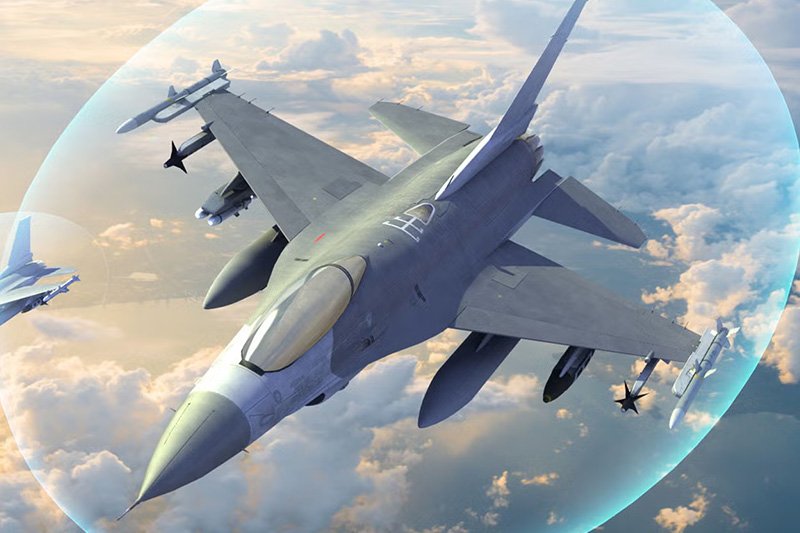
Viper Shield: The Advanced F-16 Electronic Warfare Solution for 2027 and Beyond
L3Harris has introduced a groundbreaking electronic warfare capability that is transforming F-16 fighter jet protection worldwide. Viper Shield: The Advanced F-16 Electronic Warfare Solution for 2027 and Beyond represents a fully funded, in-production system that addresses the evolving threats facing military aviation. As global defense challenges intensify and adversaries develop more sophisticated electronic warfare capabilities, Viper Shield: The Advanced F-16 Electronic Warfare Solution for 2027 and Beyond provides F-16 operators with the technological edge needed to maintain air superiority. This comprehensive electronic warfare suite has achieved critical production milestones and is undergoing rigorous flight testing, demonstrating its readiness to protect legacy and modern F-16 variants against emerging threats.
Understanding Electronic Warfare in Modern Combat
Electronic warfare has become a critical component of modern aerial combat operations. As adversaries deploy increasingly sophisticated radar systems, missile guidance technologies, and electronic countermeasures, fighter aircraft require advanced protection systems to survive and complete their missions. Electronic warfare systems detect, identify, and counter enemy threats by jamming hostile radar, disrupting communications, and providing situational awareness to pilots facing complex threat environments.
The F-16 Fighting Falcon remains one of the most widely operated fighter aircraft globally, with numerous countries relying on various configurations for their air defense needs. However, many of these aircraft were designed decades ago, before current electronic warfare threats emerged. Upgrading these platforms with modern electronic warfare capabilities ensures they remain relevant and effective against contemporary adversaries who possess advanced anti-aircraft systems and electronic attack capabilities.
L3Harris recognized the urgent need for a comprehensive electronic warfare solution that could protect the diverse global F-16 fleet without requiring extensive aircraft modifications or lengthy integration timelines. Viper Shield: The Advanced F-16 Electronic Warfare Solution for 2027 and Beyond emerged from this requirement, offering unprecedented flexibility and protection for F-16 operators worldwide.
The Viper Shield Advantage in Electronic Warfare
Ed Zoiss, President of Space and Airborne Systems at L3Harris, emphasizes that Viper Shield sets the benchmark for electronic warfare systems serving F-16 operators worldwide. The system distinguishes itself not only through full funding and active production status but also through advanced capabilities and comprehensive support that surpass competitor offerings. Even United States active duty and Guard units stand to benefit significantly from this Foreign Military Sales-funded program, highlighting the system’s universal applicability and effectiveness.
What makes Viper Shield particularly noteworthy is its variant-agnostic design approach. Unlike competing systems that require extensive customization for different aircraft configurations, Viper Shield maintains consistent performance across multiple F-16 variants. This universal compatibility reduces integration complexity, lowers costs, and accelerates deployment timelines for partner nations seeking to enhance their electronic warfare capabilities.
Read this: US Approves $686 Million F-16 Upgrade Package for Pakistan
The all-digital, software-defined architecture provides unprecedented adaptability to emerging threats. As adversaries develop new electronic warfare tactics and technologies, Viper Shield can be updated through software modifications rather than requiring hardware replacements. This approach ensures long-term relevance and cost-effectiveness, allowing operators to maintain cutting-edge capabilities without expensive retrofit programs.
Expanding Flexibility Through Podded Configuration
In 2025, L3Harris introduced a podded option for Viper Shield, dramatically expanding the system’s applicability across the global F-16 fleet. This podded configuration addresses a critical challenge facing operators of legacy F-16 variants who need advanced electronic warfare protection without extensive aircraft modifications. The podded solution ensures that older F-16 models can receive the same high-level protection as newer variants, maintaining their relevance and effectiveness in modern combat scenarios.
The exceptional versatility of the podded system allows integration with a wide range of F-16 models to meet diverse mission requirements. By leveraging external mounting, Viper Shield can be attached to aircraft quickly with minimal modifications, providing the same robust electronic warfare protection as fully integrated internal systems. This approach proves particularly valuable for air forces operating mixed F-16 fleets with various block configurations, enabling standardized protection across their entire force structure.
The podded system incorporates the same Line Replaceable Units used in integrated configurations, optimizing sustainment while ensuring consistent electronic warfare protection regardless of internal or external mounting. This commonality simplifies logistics, reduces spare parts inventories, and streamlines maintenance training. Technicians familiar with one Viper Shield configuration can easily support aircraft equipped with alternative configurations, enhancing operational flexibility and reducing support costs.
Fleet flexibility represents a significant operational advantage for air forces facing budget constraints or operating environments requiring rapid capability adjustments. Aircraft can be configured with or without Viper Shield pods based on specific mission requirements, allowing commanders to optimize their force structure. High-threat missions receive full electronic warfare protection, while routine training flights can proceed without the system, reducing unnecessary wear and preserving pod service life.
Seamless Integration Across F-16 Variants
One of Viper Shield’s most impressive features is its compatibility with various F-16 configurations, demonstrating L3Harris’s engineering excellence and understanding of operator requirements. The system seamlessly fits into Block 70/72 new aircraft, representing the latest F-16 production standard with advanced avionics and structural improvements. These newest aircraft receive Viper Shield as an integrated component, with the electronic warfare suite designed into the aircraft from the beginning.
Viper Shield also integrates effortlessly with Block 40 and Block 50 F-16 fleets, including D-models, without requiring any redesign. These mid-generation F-16 variants represent a substantial portion of the global fleet, and their continued operational relevance depends on receiving modern electronic warfare capabilities. The ability to upgrade these aircraft without extensive modifications preserves their utility while avoiding the enormous expense of fleet replacement.
Previous F-16 blocks, including some of the earliest production variants still in service worldwide, can receive Viper Shield protection through the podded system. This external mounting approach attaches to aircraft without requiring extensive internal modifications that might compromise structural integrity or require lengthy downtime. Older aircraft that might otherwise face retirement due to obsolete electronic warfare systems gain extended service life through Viper Shield integration.
This universal adaptability puts Viper Shield three to five years ahead of competing electronic warfare systems, guaranteeing that L3Harris’s international partners receive the most advanced capabilities available. While competitors struggle with integration challenges or develop variant-specific solutions requiring extended timelines, Viper Shield delivers proven protection across the entire F-16 family immediately. This technological advantage translates directly into enhanced security for partner nations facing evolving threats.
Robust International Funding and Partnership Network
The development of Viper Shield benefits from full funding backed by seven partner nations, with more countries expected to join the program this year. This international collaboration underscores the immense confidence and trust that global partners place in L3Harris’s capabilities and vision for F-16 electronic warfare protection. The multi-nation funding model ensures program sustainability and growth, eliminating the financial uncertainties that often plague defense development efforts.
Full funding allows continuous innovation and adaptation, keeping Viper Shield at the forefront of electronic warfare technology as threats evolve and new capabilities emerge. Research and development efforts can proceed without interruption, ensuring that spiral software development and hardware improvements maintain pace with adversary advances. This sustained investment prevents the technological stagnation that afflicts programs subject to budget fluctuations or uncertain financial commitments.
International partnerships facilitate shared expertise, collaborative development efforts, and streamlined integration processes across various F-16 platforms operated by partner nations. Engineers and operators from multiple countries contribute insights based on their unique operational experiences and threat environments. This collaborative approach produces a more robust and adaptable system than any single-nation development effort could achieve, incorporating lessons learned and best practices from diverse operational contexts.
The expanding partnership network also generates economies of scale that reduce per-unit costs for all participants. As more nations join the program, production quantities increase, allowing L3Harris to negotiate better component pricing and invest in more efficient manufacturing processes. These cost reductions make advanced electronic warfare protection more accessible to smaller air forces that might otherwise struggle to afford cutting-edge capabilities.
Partner nations benefit from shared logistics infrastructure and support networks. Common training programs reduce individual country expenses while ensuring consistent operational proficiency across the international user community. Maintenance facilities can share spare parts inventories and technical expertise, improving overall system availability and reducing the burden on individual nations to maintain complete support capabilities independently.
Rigorous Testing and Performance Validation
Viper Shield production hardware flight testing began in January 2025 with test flights in a single-seat Block 70 F-16, marking a critical milestone in the program’s development. These flight tests validate the system’s performance under actual operational conditions, demonstrating its ability to detect, classify, and counter realistic electronic warfare threats. Test pilots evaluate human-machine interface effectiveness, ensuring that Viper Shield provides actionable information without overwhelming operators during high-stress combat scenarios.
Flight testing encompasses diverse scenarios including high-altitude operations, low-level penetration missions, air-to-air combat simulations, and strike missions against defended targets. Each scenario exposes Viper Shield to different electromagnetic environments and threat presentations, verifying that the system performs reliably across the full spectrum of F-16 operational employment. Test data collected during these flights drives software refinements and confirms that hardware components meet demanding performance specifications.
Environmental testing of production hardware in an anechoic chamber has commenced, proving Viper Shield’s ability to perform reliably in various operational conditions. Anechoic chambers eliminate external electromagnetic interference, allowing precise measurement of system performance characteristics. These controlled tests validate that Viper Shield meets stringent electromagnetic compatibility requirements, ensuring it neither interferes with other aircraft systems nor suffers degraded performance from external electromagnetic sources.
Temperature extremes, humidity, vibration, and shock testing verify that Viper Shield components withstand the harsh environments encountered during military operations. Fighter aircraft experience dramatic temperature variations from ground operations in desert heat to high-altitude flight in extreme cold. Vibration from engine operation and aerodynamic forces subjects electronic components to continuous stress. Viper Shield must perform flawlessly despite these challenging conditions, and comprehensive environmental testing provides confidence in system reliability.
Spiral software development of the all-digital, software-defined system continues, allowing the L3Harris team to test enhancements while simultaneously producing hardware for current customers. This parallel development approach accelerates capability delivery, ensuring that partner nations receive continually improving systems rather than waiting for complete development cycles. As new threat information emerges or operational requirements evolve, software updates can be developed, tested, and deployed rapidly without disrupting hardware production.
Production Excellence and Manufacturing Scale
Ushering in the next generation of digital fighter pilot protection, Viper Shield is designed for modern aircraft to defeat advanced threats that legacy systems cannot effectively counter. With units already in production for nearly a year, the L3Harris team is rapidly scaling operations to surpass customer demands and meet growing international interest. This aggressive production ramp-up demonstrates the company’s commitment to delivering on its promises and supporting partner nations’ urgent electronic warfare requirements.
L3Harris is not just meeting but exceeding Viper Shield production milestones, aggressively expanding manufacturing capabilities far beyond initial projections. The company has invested significantly in production infrastructure, automated assembly processes, and quality control systems that ensure consistent output meeting rigorous performance standards. This manufacturing excellence positions L3Harris far ahead of any competition, which remains years away from achieving comparable production capacity.
The swift production timeline underscores L3Harris’s unrivaled ability to meet global demands with unparalleled precision and speed. While competitors announce development programs or conduct initial testing, L3Harris delivers production hardware to operational units. This execution advantage provides partner nations with immediate capability improvements rather than promises of future delivery, a critical distinction when facing current threats requiring urgent responses.
Manufacturing scalability ensures that as additional nations join the Viper Shield program, L3Harris can accommodate increased demand without sacrificing quality or extending delivery timelines. Flexible production lines adapt to varying configuration requirements, whether producing integrated systems for new aircraft or podded solutions for legacy platforms. This adaptability prevents bottlenecks that might otherwise constrain program growth and delay capability delivery to waiting customers.
Quality control processes throughout manufacturing ensure that every Viper Shield system meets exacting specifications before delivery. Comprehensive testing at component, subsystem, and system levels identifies any defects before units ship to customers. This attention to quality reduces field failures, minimizes maintenance burdens, and ensures that operators receive reliable systems performing as designed from the moment of installation.
Strategic Advantages for F-16 Operators
F-16 operators worldwide face increasingly sophisticated threats as potential adversaries field advanced integrated air defense systems, modern fighter aircraft with capable radars, and electronic warfare systems designed to disrupt coalition operations. Viper Shield provides the electronic protection necessary to operate effectively in these contested environments, ensuring that F-16 forces remain viable against current and emerging threats through 2027 and beyond.
The system’s offensive capabilities enable F-16s to penetrate defended airspace and prosecute targets despite hostile electronic warfare environments. By jamming enemy radars and communications, Viper Shield degrades adversary situational awareness and coordination, creating tactical advantages for friendly forces. These offensive electronic warfare capabilities complement the F-16’s kinetic weapons, providing commanders with additional options for mission accomplishment.
Defensive capabilities protect F-16s from enemy detection, tracking, and engagement. By disrupting hostile radar systems and missile guidance, Viper Shield reduces the probability of successful enemy attacks, increasing aircraft survivability and pilot safety. These defensive functions prove particularly critical during strike missions against heavily defended targets where aircraft face concentrated anti-aircraft threats.
Situational awareness enhancements help pilots understand the electromagnetic environment surrounding their aircraft. Viper Shield detects and classifies threats, providing warnings that enable timely defensive responses. This information advantage allows pilots to make informed tactical decisions, adjusting flight paths, altitudes, and tactics based on actual threat locations and capabilities rather than relying on pre-mission intelligence that may be incomplete or outdated.
Interoperability with coalition partners improves as more nations adopt Viper Shield for their F-16 fleets. Standardized electronic warfare capabilities enable coordinated operations with reduced fratricide risk and improved mutual support. Coalition formations can employ complementary tactics that leverage each aircraft’s Viper Shield capabilities, creating synergistic effects that multiply overall force effectiveness beyond what individual aircraft could achieve independently.
Long-Term Sustainment and Support
Beyond initial delivery, L3Harris provides comprehensive sustainment and support ensuring that Viper Shield systems remain operationally effective throughout their service lives. Training programs prepare pilots, maintainers, and mission planners to fully exploit system capabilities. Classroom instruction, simulator training, and live flying exercises develop proficiency across the user community, ensuring personnel understand both basic operations and advanced employment tactics.
Technical documentation supports field-level maintenance and troubleshooting, enabling operators to resolve common issues without requiring factory support. Clear procedures, diagnostic tools, and illustrated parts breakdowns help maintainers quickly identify and correct problems, minimizing aircraft downtime. This field-level support capability proves essential for deployed operations where access to contractor support may be limited.
Depot-level support handles complex repairs and system upgrades beyond field capabilities. L3Harris maintains facilities staffed with expert technicians equipped with specialized tools and test equipment. These depots perform scheduled overhauls, repair battle damage, and implement major upgrades, extending system service life and ensuring continued performance as requirements evolve.
Software updates address emerging threats and incorporate capability enhancements developed through ongoing research and development efforts. The software-defined architecture enables rapid deployment of new functionality without hardware modifications in most cases. Operators receive updated threat libraries, improved algorithms, and new operational modes through software releases, maintaining system relevance against evolving adversaries.
Supply chain management ensures parts availability supporting operational readiness. L3Harris maintains inventory buffers for critical components and coordinates with suppliers to prevent shortages. When parts reach obsolescence, the company proactively develops replacements using current technology, preventing supportability gaps that might otherwise ground aircraft awaiting unavailable components.
Conclusion
Viper Shield represents a transformative capability for F-16 operators worldwide, providing advanced electronic warfare protection that ensures continued relevance against current and future threats. The system’s variant-agnostic design, podded flexibility, robust international funding, rigorous testing, and proven production excellence distinguish it from competing solutions that remain years from achieving comparable maturity.
L3Harris has delivered on its promises by moving Viper Shield from concept to operational reality faster than industry norms would suggest possible. Production hardware currently undergoes flight testing while manufacturing operations scale to meet growing international demand. Partner nations receive immediate capability improvements rather than waiting years for competitors to catch up.
The system’s technical sophistication, matched with practical integration approaches, ensures that both legacy and modern F-16 variants receive world-class electronic warfare protection. From newest Block 70/72 aircraft to decades-old early production F-16s still serving worldwide, Viper Shield provides consistent protection tailored to each platform’s capabilities and limitations.
As electronic warfare threats continue evolving and potential adversaries invest heavily in capabilities designed to counter Western air power, F-16 operators need proven protection systems available now rather than promised future solutions. Viper Shield delivers this essential capability today, ensuring that the global F-16 fleet remains effective well into the 2030s and beyond.
Keep connected with us at Facebook, Twitter, YouTube, Instagram & TikTok for latest defense happening around the globe.
Discover more from International Defence Analysis
Subscribe to get the latest posts sent to your email.