





The Strait of Hormuz Emerges as the New Strategic Flashpoint in Global Trade
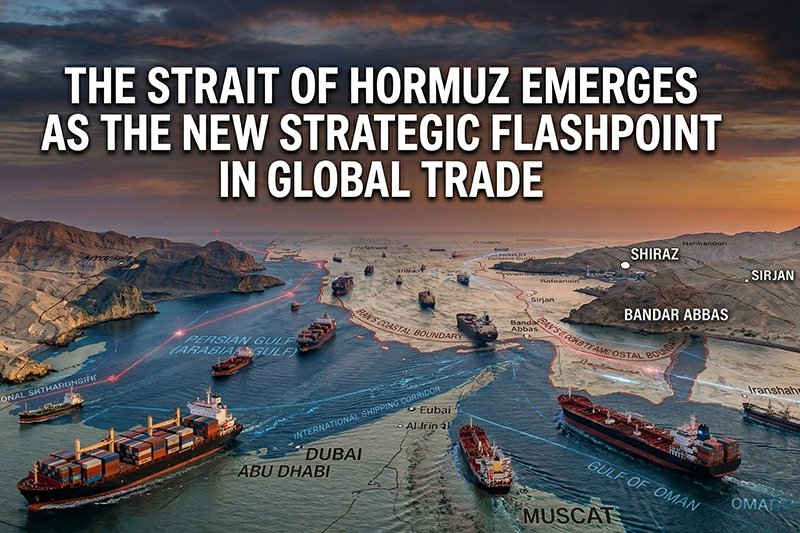
At the outset of the conflict, the Strait of Hormuz remained largely absent from global discourse. Yet as hostilities deepened, this narrow maritime corridor has rapidly evolved into one of the most consequential pressure points in international geopolitics, shaping energy markets, trade flows and strategic calculations among world powers.
Before tensions escalated, an estimated 138 to 150 vessels passed through the strait daily. This traffic represented nearly one-fifth of the world’s oil supply, alongside vast volumes of commercial goods. Such figures underscore the strait’s unparalleled importance to the global economy.
Now, Iran appears to be exploring a transformative approach, one modeled after the historical precedent of the Suez Canal. The comparison is not incidental. From 1875 onward, the canal remained under the control of British authorities and French investors through the Suez Canal Company, generating substantial profits.
This arrangement ended in 1956, when Egyptian President Gamal Abdel Nasser nationalized the canal, asserting sovereignty and converting it into a cornerstone of Egypt’s national revenue.
The canal’s economic value remains striking. In 2023, approximately 24,000 vessels transited the Suez Canal, generating close to $10 billion for Egypt. Regional instability in the Red Sea reduced traffic in 2024 to around 12,200 vessels, cutting revenues to roughly $6.25 billion. By 2025, as conditions stabilized, revenues partially rebounded to an estimated $6.75 billion.
By comparison, the scale of activity in the Strait of Hormuz is even more significant. Based on a conservative daily average of 140 vessels, annual traffic would exceed 51,000 ships, more than double the Suez Canal’s 2023 volume. This disparity highlights the immense untapped revenue potential.
Even under a modest pricing structure, charging vessels at roughly half the Suez Canal’s rates; Iran could potentially generate between $5 billion and $6 billion annually.
Reports further suggest that Tehran is considering denominating these fees in Chinese currency, a move that could carry far-reaching implications for global finance and challenge the dominance of the U.S. dollar in energy transactions.
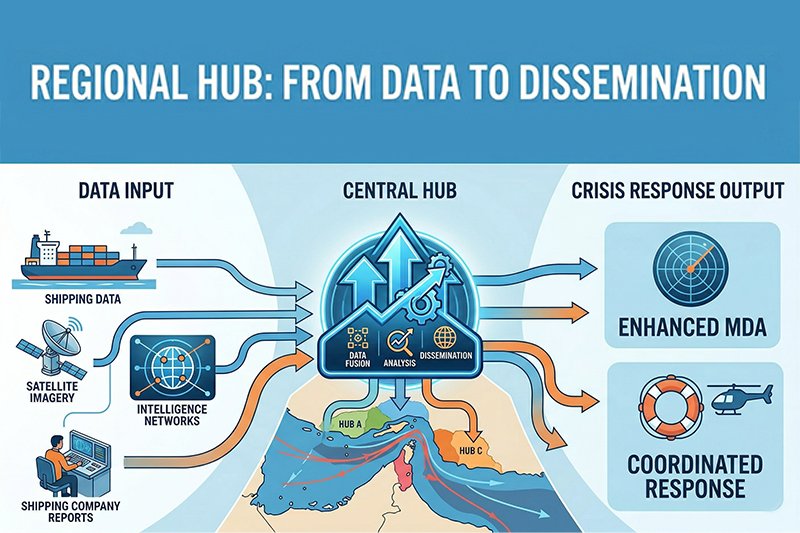
Read Me: Completing the Maritime Picture: Why Regional Information Hubs Matter in the Strait of Hormuz Crisis
Iranian policymakers are believed to be evaluating a multi-tiered fee system for transit through the strait. Proposed charges include security-related fees, environmental and pollution levies, and contributions toward infrastructure damage and reconstruction. Tehran argues that such measures are consistent with provisions under the United Nations Convention on the Law of the Sea, particularly Article 19, which addresses the concept of “innocent passage.”
Additionally, Iran maintains that portions of the strait fall within its sovereign territorial waters. By this interpretation, it claims the authority to impose regulatory frameworks governing transit and enforce compliance with its maritime policies.
Should such a system be implemented, the consequences would extend far beyond regional waters. A Hormuz fee regime could redefine global shipping economics, introduce new volatility into energy markets, and intensify strategic competition among major powers.
What began as a peripheral factor in a regional conflict is now emerging as a central lever of global influence, one that could reshape the balance of economic and geopolitical power in the years ahead.
About the Author
Talha Akram is a Reporter at Roze News and holds a Bachelor’s degree in International Relations from Air University, Islamabad.
Catch all the latest defense news from around the world—join us on Facebook, Twitter, YouTube, Instagram & TikTok.
Discover more from International Defence Analysis
Subscribe to get the latest posts sent to your email.