J-10CE Radar Kill: China Reveals How It Really Happened

More than a year after the largest air battle fought between two air forces in recent memory, China has quietly rewritten the story of how it happened. On the night of May 7 2025, Pakistani and Indian fighters clashed in a roughly hour-long beyond-visual-range engagement over Kashmir. Pakistan claims six Indian Air Force aircraft were shot down that night, including three Rafales, with no losses on its own side. India has never fully accepted that figure and the two countries still disagree on the details. What is independently confirmed is that one Rafale, tail number BS-001, was lost in the fight, the first combat loss of a French Rafale in history.

Official confirmation from Beijing was slow to arrive. It was not until January 2026 that the Chinese government acknowledged the J-10CE’s combat record, listing it among the country’s top ten defense science and technology stories of the year. That mattered because it meant a fighter’s real performance, until then known only from lab testing and simulation, had finally been demonstrated in actual combat.

The Old Theory: A Three-Part Formula

For most of the past year, analysts pointed to Pakistan’s advantage in airborne early warning as the deciding factor. Pakistan operates eight Swedish Saab 2000 Erieye aircraft alongside four Chinese ZDK-03 platforms, compared to India’s three EMB-145 Netra jets and three Russian-Israeli A-50EI aircraft. More coverage in the sky generally means more warning time on the ground and in the cockpit.

That advantage fed a widely accepted theory: the ZDK-03 AEW&C aircraft found the target, a J-10CE fighter fired the shot, and a PL-15 missile flew the intercept, all without the J-10CE ever switching on its own radar. Under this theory the fighter was little more than a launch platform, guided entirely by an aircraft flying safely in the background.

What Ben De Actually Said

That theory no longer holds up, according to the man who built the radar in question. In July 2026, CCTV’s program “Sister Xia’s Dialogue” interviewed Academician Ben De, one of the key figures behind China’s airborne pulse-Doppler fire control radar program and a recipient of the country’s top science and technology award. He said the J-10CE never relied on the full external targeting handoff everyone assumed. Instead, the jet’s own KLJ-7A radar and avionics carried out detection, lock-on and attack independently, out to ranges of 200 kilometers, without triggering the radar-warning or missile-approach systems on the Indian aircraft.

If accurate, this means the AEW&C aircraft were not pulling the trigger in the way most reporting assumed. The J-10CE was finding, tracking and striking its targets on its own.

A grim detail from Pakistan’s combat accounts appears to support this. Several of the downed Rafale pilots reportedly never ejected, despite modern ejection seats offering a strong survival rate. The likely reason is simple: they never received a warning at all. In air combat, the most dangerous position is not losing a fight you saw coming, it is a fight that ends before you know it started.

How the KLJ-7A Stayed Hidden

The technical explanation centers on gallium nitride, or GaN, technology. GaN allows the KLJ-7A to reduce its transmit power while keeping the same detection range, meaning less energy is broadcast for an enemy’s radar-warning receiver to pick up. The radar reportedly pairs this with frequency-hopping across a wide band, pulse compression and waveform shaping designed to make its emissions resemble background noise rather than a hostile scan.

This capability did not appear overnight. China began developing its first airborne pulse-Doppler fire control radar back in 1979, and Ben De has spent close to five decades working on that lineage. The early Type 1471 radar alone took ten years from project start to national evaluation. Ben De has said plainly that China now fields every category of radar its foreign competitors have, and in some cases does it better. He frames the shift as moving away from a pure hardware race toward software, signal processing and AI-assisted judgment as the new battleground.

Also read this: Triple Helix Model of Innovation in Military Technology and Defense Industry

The Same Radar Reportedly Beat Spectra Too

The most striking claim is what this radar allegedly got past. If Ben De’s account is accurate, the KLJ-7A did not just slip by the Russian-origin warning systems fitted to the MiG-29 and Su-30MKI. It also evaded the Spectra self-protection suite built by Thales, one of the most respected electronic warfare systems flying today and standard equipment on the Rafale.

What Comes Next

Ben De has also spoken about where radar technology is heading: beyond simply seeing a target, toward understanding it, and beyond assisting a pilot’s judgment, toward assisting the decision itself. Whether every detail of the May 7 engagement eventually holds up, that trajectory is where modern air combat is heading, and the J-10CE’s radar kill is already being presented in China as proof it works.

Catch all the latest defense news from around the world—join us on
Facebook, Twitter, YouTube, Instagram & TikTok.

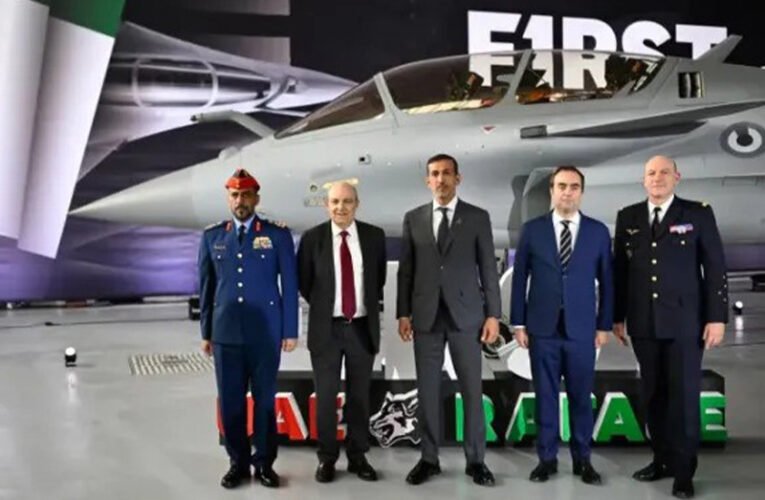
France Unveils First Rafale F4 For United Arab Emirates

The recent rollout of the first Dassault Rafale F4 fighter for the United Arab Emirates marks a significant milestone in international defense procurement. This landmark delivery represents a pivotal moment in the UAE’s military modernization strategy and France’s global defense exports.

Historic Defense Contract

In December 2021, the United Arab Emirates finalized a groundbreaking defense contract to purchase 80 Rafale F4 aircraft. Valued at approximately 17 billion euros, this became France’s largest defense contract in terms of both quantity and value. The agreement was signed during a state visit by French President Emmanuel Macron to Abu Dhabi, symbolizing the strong diplomatic ties between the two nations.

Advanced Technological Capabilities

The Rafale F4 variant brings substantial technological improvements to the UAE’s air force. Enhanced networking capabilities, advanced weapons systems, and upgraded avionics position the aircraft as a critical component of the UAE’s future defense strategy. The jet offers improved stealth features, increased range, and multi-role combat capabilities suitable for both air-to-air and air-to-ground missions.

Strategic Regional Implications

This acquisition significantly bolsters the UAE’s military capabilities in a strategically volatile region. The Rafale F4 is expected to complement the country’s existing Mirage 2000 fleet and integrate alongside future F-35 acquisitions. The move represents a calculated effort to maintain technological superiority and defensive readiness.

Defense Industry and Geopolitical Impact

The contract extends beyond mere equipment sales. It supports thousands of jobs in the French defense industry and strengthens diplomatic relations between France and the UAE. The deal reflects France’s growing influence in the Middle East and positions French military technology as a competitive option in the global arms market.

Technological and Training Support

The comprehensive package includes extensive support mechanisms. This encompasses logistical support, pilot and maintenance crew training, spare parts provision, and weapons systems integration. Such holistic support ensures the UAE can maximize the potential of its new fighter fleet.

Future Outlook

The gradual delivery of aircraft, expected to begin in 2027, allows the UAE to systematically integrate these advanced fighters into its existing fleet. This strategic approach demonstrates careful military planning and technological adaptation.

Also read this: French Army Takes Delivery Of First MEPAC Armored Vehicle

Broader Defense Relationship

The Rafale deal represents just one aspect of the growing defense relationship between France and the UAE. Both countries have been developing comprehensive military cooperation, including joint exercises, intelligence sharing, and collaborative defense initiatives.

The introduction of the Rafale F4 into the UAE’s arsenal signals a significant shift in regional military dynamics. It underscores the continuing evolution of defense technologies and the strategic importance of international military partnerships.

Keep connected with us at Facebook, Twitter, YouTube, Instagram & TikTok for latest defense happening around the globe.

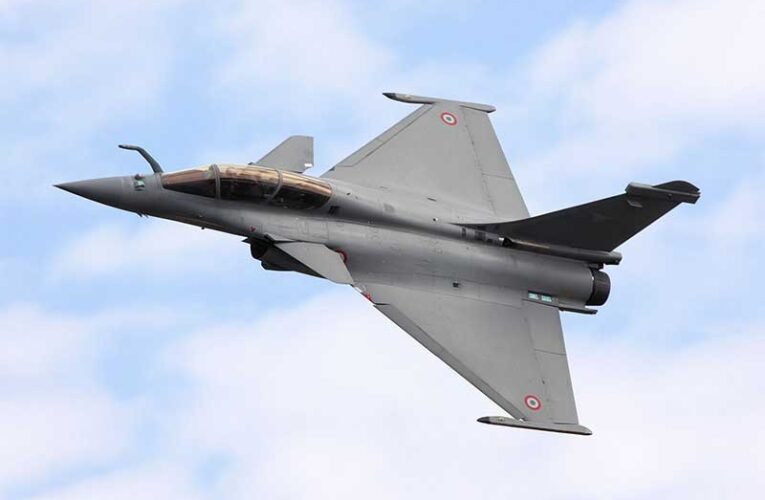
Dassault Boosts Rafale Production to Three Jets Per Month

French aerospace manufacturer Dassault Aviation plans to significantly increase production of its Rafale multirole fighter jet to three units per month in 2023, up from two per month currently. The production ramp-up comes in response to a surge in new orders from both foreign militaries and the French Air Force itself.

“We are moving from less than one unit in 2020, which was critical, to three units per month. Currently, we are at two units,” stated Dassault CEO Eric Trappier in an interview with French media. He added the company has the capacity for a rate of up to four Rafales monthly if required.

The accelerated production enables Dassault to work through its growing order backlog. In 2022 alone, the company secured 92 new Rafale orders, with another 60 orders already booked in just the first half of 2023, including 18 from an undisclosed customer.

Also read this: MoD Reveals £2.1 Billion Cost for AH-64E Apache Program

French Air Force Rafale Orders

A major driver is the French government’s own decision in January to purchase an additional 42 Rafale fighters for $5.5 billion amid concerns over the Future Combat Air System (FCAS) program. FCAS, a French-German-Spanish effort, is not expected to field a 6th generation replacement for the Rafale until after 2045 at the earliest.

As a result, France plans to keep upgrading and extending the service life of its Rafale fleet well into the 2040s as a stop-gap. The 42 newly ordered jets bring France’s total Rafale procurement to 234 aircraft.

The new French order covers the F4 variant but with a provision to upgrade to the “Super Rafale” F5 configuration in the 2030s incorporating select 6th gen capabilities like sensor fusion and cognitive technologies. France has operated the Rafale since the mid 2000s, employing it for combat operations in Afghanistan, Libya, Mali and other theaters.

Rafale Export Momentum

On top of domestic orders, Dassault has also landed major export deals for the Rafale from India, Egypt, the UAE and Indonesia totaling 261 aircraft to date. The affordable, compact, multirole fighter has proven popular on the international market compared to larger, pricier competitors like the F-35.

With its integrated sensor suite, modern electronic warfare systems, long endurance and large payload, the Rafale combines air superiority with precision strike and long-range interdiction capabilities. It provides a potent deterrent for smaller air forces and complements high end fighters in larger inventories.

As Dassault works to increase its final assembly throughput, the company’s supply chain partners like Safran, Thales and MBDA are also gearing up. With over 500 Rafales on order and more potential export deals in the pipeline, the French fighter production lines will be running at maximum capacity for years to come to meet global demand.

Keep connected with us at Facebook, Twitter, YouTube, Instagram & TikTok for latest defense happening around the globe.

© International Defence Analysis | All Rights Reserved