




Netherlands Orders Skyranger Air Defense Systems
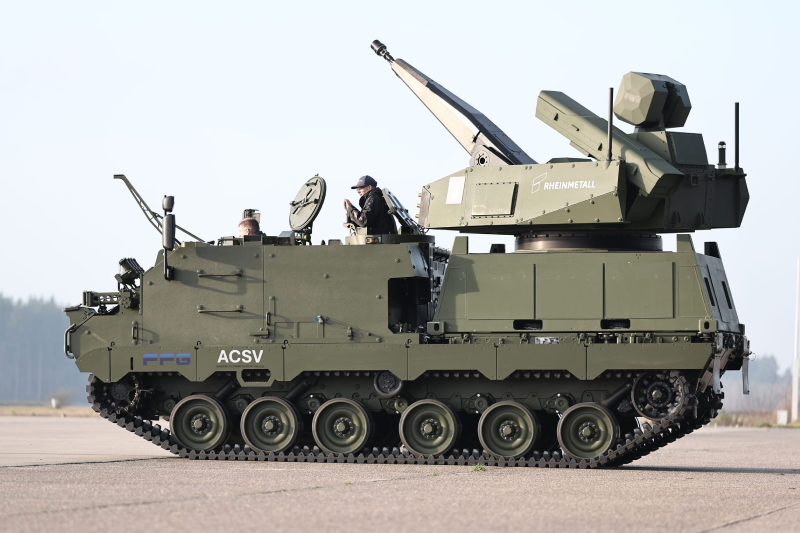
The Netherlands orders Skyranger air defense systems, with most units to be produced domestically through Rheinmetall’s Dutch facilities. As the Netherlands orders Skyranger air defense systems, the contract signed in Soesterberg aims to strengthen the country’s capability to counter evolving drone threats through both mobile combat platforms and fixed installations, with delivery scheduled by 2029.
Comprehensive System Acquisition
The Dutch Ministry of Defense contract encompasses Skyranger 30 systems including mobile combat platforms, fixed installation variants, and training simulators for military personnel. This comprehensive package ensures operational capability across diverse deployment scenarios while providing adequate training infrastructure for Dutch armed forces personnel who will operate and maintain these sophisticated air defense systems.
Accelerated Delivery Timeline
The contract stipulates final Skyranger system delivery to the Dutch army no later than 2029, a timeline considered remarkably fast for a project of this scale and complexity. This accelerated schedule reflects both urgent operational requirements for enhanced counter-drone capabilities and confidence in production capacity spanning Rheinmetall’s Swiss and Dutch facilities.
Hybrid Production Strategy
Rheinmetall Switzerland will construct the first three prototype systems, ensuring quality standards and technical validation before scaling production. Subsequently, Rheinmetall Netherlands will assume primary responsibility for producing and assembling remaining systems, maximizing domestic industrial participation while maintaining Swiss technical oversight ensuring performance specifications are met.
Counter-Drone Mission Profile
The Skyranger 30 is specifically engineered to counter drones weighing up to 600 kilograms at short ranges extending to 5 kilometers. This design optimization addresses the proliferating threat from small unmanned aerial systems that have demonstrated devastating effectiveness in recent conflicts, particularly Russia’s war in Ukraine where drones have fundamentally transformed battlefield dynamics.
30mm Ammunition Effectiveness
The system employs 30mm ammunition capable of quickly and effectively destroying drone targets through programmable airburst munitions and conventional rounds. This caliber provides optimal balance between lethality against small aerial targets and ammunition capacity, enabling sustained defensive operations without frequent reloading that could create vulnerability windows during intensive drone swarm attacks.
Integrated Defense Architecture
The Skyranger systems will complement existing medium and short-range defense assets within the Netherlands’ layered air defense architecture. Integration with radar networks, command-and-control systems, and other air defense platforms creates comprehensive protection spanning long-range ballistic missile threats down to small commercial drones adapted for military purposes.
Combat Unit Protection
Mobile Skyranger platforms will accompany Dutch combat units during deployments, providing organic air defense against drone reconnaissance, targeting, and direct attack threats. This capability proves essential for modern mechanized operations where adversary drones can identify vehicle concentrations, direct artillery fires, or conduct precision strikes using loitering munitions.
Strategic Infrastructure Defense
Fixed Skyranger installations will protect strategic facilities including the Port of Rotterdam Europe’s largest seaport and critical logistics hub alongside military bases housing personnel, equipment, and command facilities. These static defensive positions create protective bubbles around high-value infrastructure that adversaries might target with drone strikes during conflicts.
Rotterdam Port Significance
Rotterdam’s selection as a protected site underscores recognition that modern conflicts could extend beyond traditional military targets to economic infrastructure. Protecting this vital trade gateway reflects Dutch awareness that adversaries might attempt disrupting European logistics through relatively inexpensive drone attacks rather than costly conventional military operations.
Training Simulator Integration
The contract’s inclusion of training simulators ensures Dutch military personnel can achieve proficiency before systems become operationally deployed. Simulator training reduces costs, accelerates learning curves, and allows practicing engagement scenarios too dangerous or expensive for live-fire training, maximizing operational effectiveness when systems enter service.
Domestic Industrial Benefits
Assigning primary production responsibility to Rheinmetall Netherlands creates substantial domestic economic benefits including high-technology employment, industrial capability development, and potential export opportunities if other nations select Skyranger systems. This industrial participation transforms defense procurement from pure consumption into investment strengthening national technological capacity.
European Defense Industrial Cooperation
The Swiss-Dutch production collaboration exemplifies European defense industrial cooperation where multinational corporations leverage facilities across countries based on capabilities and market access. This model allows smaller European nations participating meaningfully in advanced weapons production rather than serving merely as customers for systems produced elsewhere.
Counter-UAS Technology Evolution
The Skyranger represents cutting-edge counter-unmanned aircraft system technology addressing threats that barely existed when most current air defense systems were designed. Traditional air defense optimized against fast-moving manned aircraft or missiles often proves ineffective against slow, small drones requiring different detection methods, engagement algorithms, and munitions.
Lessons from Ukraine Conflict
The Netherlands’ urgent Skyranger procurement reflects lessons from Ukraine where drones have revolutionized warfare, conducting reconnaissance, artillery spotting, precision strikes, and kamikaze attacks. Both Russian and Ukrainian forces depend heavily on unmanned systems, demonstrating that future conflicts will feature intensive drone employment requiring robust counter-drone capabilities.
NATO Interoperability Considerations
As a NATO member, the Netherlands ensures its Skyranger systems integrate with alliance command-and-control architectures, enabling coordinated air defense operations with allied forces. This interoperability proves essential for collective defense scenarios where Dutch systems might operate alongside German, British, American, or other allied air defense platforms.
Rapid Reaction Capability
The Skyranger’s automated target detection, tracking, and engagement capabilities enable rapid reaction defeating time-sensitive drone threats. Automated systems respond faster than human operators can manually acquire and engage targets, proving crucial against fast-moving threats or coordinated swarm attacks attempting to overwhelm defenses through numerical superiority.
Also read this: Netherlands Orders 3 New NH90 NATO Frigate Helicopters
Multi-Domain Threat Environment
Modern military operations occur within contested electromagnetic environments where adversaries employ electronic warfare, cyber attacks, and physical threats simultaneously. The Skyranger’s integration into broader defense networks ensures resilience against adversaries attempting to blind, jam, or deceive individual systems through multi-domain attacks.
Future Capability Growth
The 2029 delivery timeline allows incorporating technological improvements emerging during production as counter-drone technologies evolve rapidly. Modular system architecture potentially enables future upgrades integrating directed-energy weapons, improved sensors, or enhanced automation as these technologies mature without requiring complete system replacement.
Export Market Potential
Successful Dutch deployment could generate international Skyranger sales, particularly among European nations recognizing similar drone threat requirements. Rheinmetall Netherlands’ production role positions the facility as potential supplier for regional customers, creating economies of scale reducing per-unit costs while strengthening European defense industrial sovereignty.
Keep connected with us at Facebook, Twitter, YouTube, Instagram & TikTok for latest defense happening around the globe.
Discover more from International Defence Analysis
Subscribe to get the latest posts sent to your email.