






Lockheed Martin Unveils Rapidly Developed Lamprey Drone
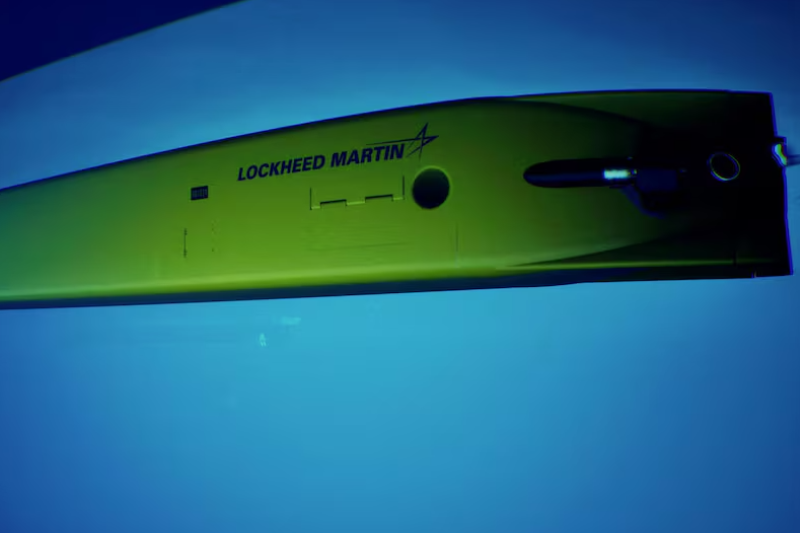
Lockheed Martin has unveiled the Lamprey, a cutting-edge unmanned underwater vehicle designed for covert surveillance and sea denial operations. Showcased for the first time at WEST 2026, the multi-mission drone represents a significant leap forward in autonomous maritime warfare capabilities.
Named After Nature’s Most Tenacious Predator
The Lamprey drone takes its name from the parasitic jawless fish known for latching onto larger creatures with its powerful suction mouth, and the parallel is no coincidence. The drone’s defining feature is its ability to autonomously navigate toward and physically attach itself to submarines, warships, and even the seabed using suction cups mounted on its hull. Mark Johnson, program director for Lockheed Martin’s unmanned maritime solutions division, explained the operational logic clearly: rather than burning battery power traversing long distances independently, the drone hitches a ride on a host vessel into whatever theater it needs to reach, conserving energy for its actual mission.
Solving the Battery Problem for Underwater Drones
Range and power have long been the Achilles heel of unmanned underwater vehicles. The Lamprey addresses this fundamental constraint in two ways. First, by attaching to a vessel and going dormant during transit, it avoids draining its battery before reaching its operating area. Second, once suctioned onto a moving ship, it can deploy onboard hydrogenerators that harvest energy from the vessel’s movement through the water. This self-charging capability not only keeps the drone powered for its mission but can also support whatever specialized equipment is loaded into its payload bay, making extended operations genuinely feasible without a support ship nearby.
A Versatile 24-Cubic-Foot Payload Bay
What makes the Lamprey particularly formidable is the sheer flexibility of its mission configuration. Johnson highlighted a 24-cubic-foot internal payload cavity that can be adapted for a wide range of operational roles. The bay can carry sensors and intelligence, surveillance, and reconnaissance equipment for covert monitoring, or it can be loaded with effectors including small torpedoes and loitering munitions for strike missions against fast attack craft and warships. The drone can also launch unmanned aerial vehicles from the same cavity, adding an above-surface dimension to what begins as an underwater platform. Concept graphics released by Lockheed Martin depict these capabilities being employed across area denial and strike scenarios, painting a picture of a system that can shift roles depending on mission requirements.
Rapid Development in Just 14 Months
One of the most striking aspects of the Lamprey story is how quickly it came together. Johnson confirmed that the system was developed in just 14 months, drawing on internally funded technologies that Lockheed Martin has been building and refining over the past two decades. This rapid development timeline reflects both the maturity of the underlying technology and the urgency the US defense industry feels in delivering new unmanned capabilities. Lockheed Martin describes the system as built specifically to meet the US Navy’s need for covert, assured access and sea denial operations, signaling a close alignment between the program’s design priorities and current naval requirements.
Dont miss this: Turkish Defense Industry Uses AI to Upgrade Missile Systems
Fitting Into the Hellscape Strategy
The Lamprey’s reveal arrives at a moment when unmanned systems have taken center stage in US defense planning. Indo-Pacific Command’s Hellscape concept, which aims to deter a potential Chinese invasion of Taiwan by flooding the strait with swarms of unmanned surface, underwater, and aerial systems, has accelerated demand for exactly the kind of versatile, long-endurance platform the Lamprey represents. A drone capable of covert insertion, extended loitering, surveillance, and strike offers commanders significant tactical flexibility in a contested maritime environment where conventional platforms face growing risks.
More Variants on the Horizon
Lockheed Martin is not stopping with the current prototype. Future plans include developing Lamprey variants ranging from 20 to 35 feet in length, alongside the construction of a second test vehicle that will incorporate lessons learned from ongoing trials. Johnson noted that loitering time and operational range will vary significantly depending on the size and payload configuration of each variant, giving the Navy options to tailor the system to specific mission profiles as the program matures.
Catch all the latest defense news from around the world—join us on Facebook, Twitter, YouTube, Instagram & TikTok.
Discover more from International Defence Analysis
Subscribe to get the latest posts sent to your email.