





China’s Jiutian UAV Completes Maiden Flight Test
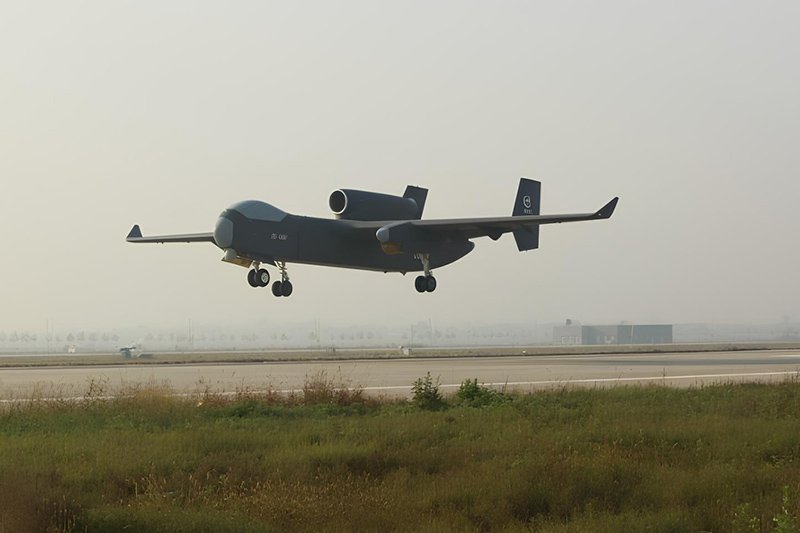
Recently, the Jiutian UAV completed its maiden flight in Shaanxi Province, once again attracting widespread attention. This giant UAV, which debuted at last year’s Zhuhai Airshow, showcased its enormous military application potential in terms of heterogeneous honeycomb mission bays and the ability to carry multiple types of munitions. The announcement that China’s Jiutian UAV Completes Maiden Flight Test has generated significant interest globally, as this successful flight demonstrates a major breakthrough in unmanned warfare technology and swarm drone capabilities.
Understanding the Jiutian UAV: An Airborne Drone Carrier
The Jiutian UAV stands apart from conventional unmanned aerial vehicles through its unprecedented scale and revolutionary design philosophy. At its core lies an innovative heterogeneous honeycomb mission bay system capable of deploying two to three hundred micro UAVs or loitering munitions simultaneously. This swarm-carrying capacity, combined with the ability to mount various munitions including the PL-12E air-to-air missile, has earned it the designation “airborne UAV carrier.”
What makes the Jiutian UAV truly formidable is its technical specifications. With a payload capacity reaching 6 tons, a ferry range of 7,000 kilometers, and a service ceiling of 15,000 meters, this platform achieves global operational reach. A single unit possesses firepower equivalent to a traditional missile battery, yet operates with the flexibility and autonomy of an unmanned system.


Also Read this: China Unveils Swarm-Capable Jiutian Drone at Zhuhai
Revolutionary Swarm Warfare Capabilities
Traditional drone operations typically focus on surgical strikes or reconnaissance missions. The Jiutian UAV introduces an entirely different paradigm: saturation warfare through coordinated swarm attacks. When deployed, hundreds of drones can descend from high altitudes, each assigned specific roles including reconnaissance, electronic jamming, or direct attack missions.
This saturation approach creates an overwhelming challenge for enemy air defense systems. Adversaries would need to expend enormous quantities of anti-aircraft missiles to counter such attacks. After multiple engagement rounds, even sophisticated air defense networks risk ammunition depletion and system collapse. The economic and tactical implications are staggering intercepting swarm drones becomes prohibitively expensive while the attacking platform remains at standoff distances.
The swarm warfare concept represents more than technological advancement; it embodies a fundamental shift in military strategy. Rather than concentrating firepower in vulnerable manned platforms or small numbers of expensive missiles, the Jiutian UAV distributes offensive capability across numerous expendable units coordinated by sophisticated artificial intelligence.
Multirole Flexibility and Strategic Applications
Beyond its primary swarm deployment role, the Jiutian UAV demonstrates remarkable versatility across multiple mission profiles. It can function as an advanced reconnaissance platform, gathering and relaying battlefield intelligence to frontline assets like the J-20 stealth fighter. This information-sharing capability enhances the effectiveness of the entire combat ecosystem.
Naval applications present particularly intriguing possibilities. The platform could operate as a carrier-based aircraft aboard vessels like the Type 076 amphibious assault ship, creating an integrated sea-air combat system with unprecedented reach and flexibility. Imagine an amphibious task force projecting swarm warfare capabilities hundreds of kilometers inland while simultaneously providing fleet defense and reconnaissance this represents a revolutionary approach to power projection.
The 7,000-kilometer operational range enables the Jiutian UAV to launch from mainland China and cover areas extending to the second island chain, providing strategic deterrence and operational flexibility across vast maritime and territorial expanses. This range advantage, combined with the 15,000-meter service ceiling, places potential adversaries in difficult defensive positions.
International Reactions: Divided Perspectives
Global responses following the news that China’s Jiutian UAV Completes Maiden Flight Test reveal interesting geopolitical dynamics. Media outlets in Ukraine and India expressed skepticism, with Ukrainian sources dismissing it as vulnerable to air defenses and Indian commentators criticizing its radar signature. These assessments, however, may overlook the platform’s intended operational doctrine maintaining standoff distances while releasing swarms rather than penetrating defended airspace directly.
American military analysts and media adopted a markedly different tone, conducting serious assessments of the platform’s capabilities. U.S. defense experts expressed concern that swarm warfare tactics could overwhelm defensive systems, imposing unsustainable interception costs and creating tactical dilemmas. This sober recognition reflects an understanding that the Jiutian UAV addresses real capability gaps in the American arsenal.
Current U.S. drone platforms illustrate this disparity. The MQ-9 Reaper, while effective in permissive environments, offers inferior payload and range compared to the Jiutian UAV and lacks swarm coordination capabilities. The RQ-4 Global Hawk provides excellent reconnaissance but no offensive potential. American drone systems generally separate reconnaissance and strike functions rather than integrating them into cohesive operational platforms.
Strategic Implications for Naval Warfare
The Jiutian UAV poses particularly acute challenges for carrier strike groups, which have formed the backbone of American naval power projection for decades. While these formations maintain sophisticated layered defenses, saturation attacks from coordinated swarms could quickly deplete defensive ammunition reserves. Escorting destroyers and cruisers carry finite missile inventories typically dozens rather than hundreds of interceptors.
A potential engagement scenario illustrates the problem: initial swarm waves force defenders to expend missiles against relatively inexpensive drones. Once defensive magazines run low, follow-on attacks employing heavy anti-ship missiles like the YJ-12 face degraded opposition. This sequential approach—swarm depletion followed by precision strikes creates an existential threat to surface combatants including aircraft carriers.
The economic dimensions compound military concerns. Intercepting each small drone with missiles costing hundreds of thousands or millions of dollars creates an unsustainable exchange ratio. This cost imbalance pressures defense budgets and raises questions about the sustainability of forward military deployments in contested environments.
Technological Leadership and Development Pace
The successful development and flight testing demonstrates more than engineering capability—it reflects systematic advantages in defense innovation and integration. While American military planners discuss swarm warfare concepts, most remain theoretical or exist only in limited experimental programs. China has progressed from concept to flight-tested hardware, widening the technological gap.
Even with urgent adjustments and increased funding, catching up presents significant challenges for competitors. The development trajectory suggests China has established robust research frameworks, manufacturing capabilities, and testing regimes that enable rapid iteration. The Jiutian UAV represents not an isolated achievement but evidence of systematic capabilities that will continue generating advanced platforms.
This technological leadership extends beyond hardware to operational concepts and doctrines. China has pioneered an original path integrating reconnaissance, electronic warfare, and kinetic effects into coordinated autonomous systems. Future military competitions will increasingly center on these integrated capabilities rather than traditional metrics like fighter aircraft numbers or ship tonnage.
Civilian Applications and Economic Impact
While military applications dominate discussions, the Jiutian UAV holds substantial civilian potential. Emergency response scenarios could benefit from its payload capacity and range imagine rapidly deploying rescue equipment, medical supplies, or communication infrastructure to disaster zones. Logistics applications in remote or underdeveloped regions become feasible when traditional infrastructure proves inadequate.
Energy sector applications include pipeline monitoring, resource mapping, and infrastructure inspection across vast territories. Agricultural monitoring, environmental assessment, and scientific research missions could leverage the platform’s endurance and sensor-carrying capacity. These civilian uses would stimulate development in related industries including autonomous systems, artificial intelligence, sensor technology, and data analytics.
The economic implications extend to workforce development and industrial capacity. Manufacturing and maintaining advanced autonomous systems requires sophisticated supply chains, skilled technical personnel, and robust quality control systems. Success in military applications often catalyzes broader industrial capabilities that benefit civilian sectors, a pattern visible throughout aerospace history.
Future Outlook and Strategic Considerations
The successful maiden flight signals China’s emergence as the frontrunner in drone carrier technology and swarm warfare systems. This achievement reflects deeper capabilities in systematic integration, innovative operational concepts, and advanced manufacturing that will shape military and civilian aviation for decades.
Future military competition will increasingly emphasize these asymmetric capabilities rather than traditional symmetrical force comparisons. The question won’t simply be “how many aircraft carriers or fighters does each side possess?” but rather “how effectively can integrated autonomous systems achieve strategic objectives while managing costs and risks?”
As the technology matures and proliferates, other nations will pursue similar capabilities, creating new dynamics in international security. Arms control discussions may eventually address autonomous swarm systems just as they currently address nuclear weapons, ballistic missiles, and other strategic capabilities. The fact that China’s Jiutian UAV Completes Maiden Flight Test comes at a pivotal moment when autonomous systems transition from experimental concepts to operational realities.
For China, the platform represents validation of long-term investments in defense innovation and systematic military modernization. The ability to conceive, develop and field such revolutionary systems demonstrates technological confidence and strategic vision that will influence regional and global power balances.
The milestone where China’s Jiutian UAV Completes Maiden Flight Test marks more than a successful test, it announces a new era in military aviation where autonomous swarms operating from carrier platforms reshape strategic calculations and operational planning across all warfare domains.
Keep connected with us at Facebook, Twitter, YouTube, Instagram & TikTok for latest defense happening around the globe.
Discover more from International Defence Analysis
Subscribe to get the latest posts sent to your email.