



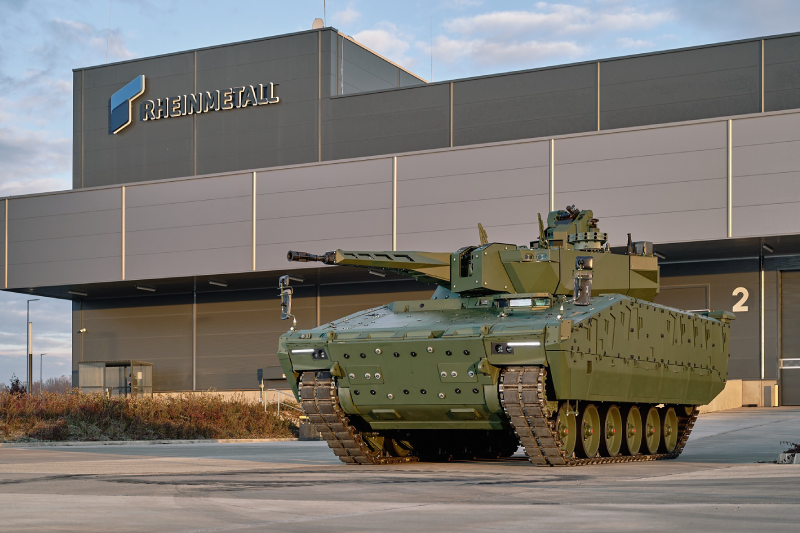
Ukraine to Receive First Rheinmetall Lynx IFVs in Early 2026
German defense manufacturer Rheinmetall has officially confirmed that it will begin delivering its advanced Lynx KF41 Infantry Fighting Vehicles (IFVs) to the Ukrainian Defense Forces in early 2026. This development marks a significant step in strengthening Ukraine’s armored capabilities amid ongoing security challenges. The agreement, signed in December 2025, highlights deepening defense cooperation between Ukraine and Germany, with Berlin fully financing the first phase of deliveries.
The initial batch will include five Lynx IFVs, with a total cost amounting to several tens of millions of euros. Rheinmetall CEO Armin Papperger described the deal as a “fundamental success,” emphasizing the company’s commitment to supporting Ukraine while acknowledging the German government’s critical role in enabling the project.
Contract Details and Delivery Timeline
According to Rheinmetall’s official statements, the first Lynx IFVs are scheduled to arrive in Ukraine in early 2026. The contract was concluded at the end of 2025, ensuring a relatively fast delivery timeline for such advanced armored platforms. The German government has agreed to cover the full cost of the first stage, removing immediate financial hurdles for Ukraine.
This initial delivery is seen as a starting point rather than a standalone order. Rheinmetall and Ukrainian officials have indicated that further batches could follow, depending on funding and political decisions. However, while the first five vehicles are secured, the financing of future deliveries remains uncertain. Additional orders could require hundreds of millions, or even billions, of euros, making international support crucial for expansion.
Lynx KF41 Capabilities and Combat Design
The Lynx KF41 is one of Rheinmetall’s most advanced infantry fighting vehicles and was first unveiled in 2018. Weighing approximately 44 tons, the heavy IFV is designed for high-intensity combat environments. It is equipped with the LANCE two-person turret, which can mount either a 30 mm or 35 mm automatic cannon, depending on customer requirements.
In addition to its main gun, the Lynx IFV features a coaxial machine gun and a launcher for anti-tank guided missiles, giving it strong anti-armor capabilities. The vehicle’s design reflects lessons learned from modern conflicts, including those observed in Ukraine. Rheinmetall has confirmed that the versions destined for Ukraine will include specialized equipment tailored to battlefield conditions and operational experience gained during the war.
Protection is another key strength of the Lynx KF41. The vehicle offers frontal protection against 30 mm projectiles and side protection against 14.5 mm rounds. Its reinforced floor can withstand a blast equivalent to 10 kilograms of TNT, significantly improving crew survivability against mines and improvised explosive devices.
Mobility, Crew, and Operational Range
Powering the Lynx IFV is a 1,470-horsepower Liebherr D9612 engine, providing impressive mobility for a vehicle of its size. The IFV can reach speeds of up to 70 km/h and has an operational range of approximately 500 kilometers on highways. This combination of speed and endurance allows it to operate effectively across a wide range of terrains.
The Lynx KF41 is operated by a crew of three and can carry up to nine fully equipped soldiers in its troop compartment. This capacity makes it well-suited for mechanized infantry operations, enabling rapid deployment and strong fire support for dismounted troops.
Also read this: China Conducts First 2026 Flights of J-35 Stealth Fighter
Localization Plans and Funding Challenges
Beyond deliveries, Rheinmetall and Ukraine are discussing the localization of Lynx IFV production within Ukraine. Such a move would strengthen Ukraine’s domestic defense industry and reduce long-term dependence on foreign manufacturing. However, Rheinmetall CEO Armin Papperger has noted that local production is only feasible if the order volume reaches between 200 and 300 vehicles.
Funding remains the main obstacle to these ambitious plans. While Germany has financed the initial batch, no clear source of funding has been identified for larger-scale procurement. Despite this uncertainty, the confirmed delivery of the first Lynx IFVs in early 2026 represents a major boost to Ukraine’s armored forces and a significant milestone in European defense cooperation.
Catch all the latest defense news from around the world—join us on Facebook, Twitter, YouTube, Instagram & TikTok.
Discover more from International Defence Analysis
Subscribe to get the latest posts sent to your email.