





Ghost Bat Drone Achieves Historic Air-to-Air Missile Strike
Boeing’s MQ-28A Ghost Bat has reached a critical milestone in unmanned combat aviation by successfully launching an AIM-120 AMRAAM missile and destroying an aerial target. This achievement marks a significant step forward in Australia’s development of autonomous combat aircraft capabilities.
Breakthrough Weapons Test at Woomera Range
The historic weapons trial occurred on December 8 at the Woomera Range Complex in southern Australia, where the Ghost Bat drone engaged and eliminated a Phoenix jet-powered target drone using a live AIM-120 Advanced Medium-Range Air-to-Air Missile. This test was conducted as part of Trial Kareela 25-4, demonstrating the platform’s growing combat readiness.
During the engagement, the MQ-28 operated alongside a Royal Australian Air Force E-7A Wedgetail early warning aircraft, with additional support from an F/A-18F Super Hornet. This collaborative approach showcases the Ghost Bat’s intended role as a loyal wingman to crewed aircraft, extending their combat reach while reducing risk to human pilots.
External Weapons Configuration and Future Capabilities
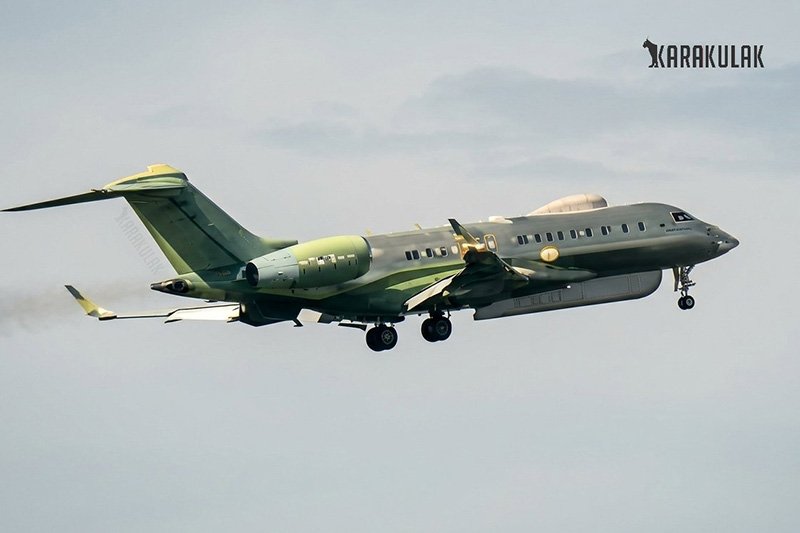
For this landmark test, the Ghost Bat carried the AMRAAM on an external pylon mounted beneath the left side of the aircraft, positioned directly under the engine intake. While this external configuration proved effective, the drone currently lacks an internal weapons bay—a feature that may be incorporated in future iterations to maintain stealth characteristics during combat operations.
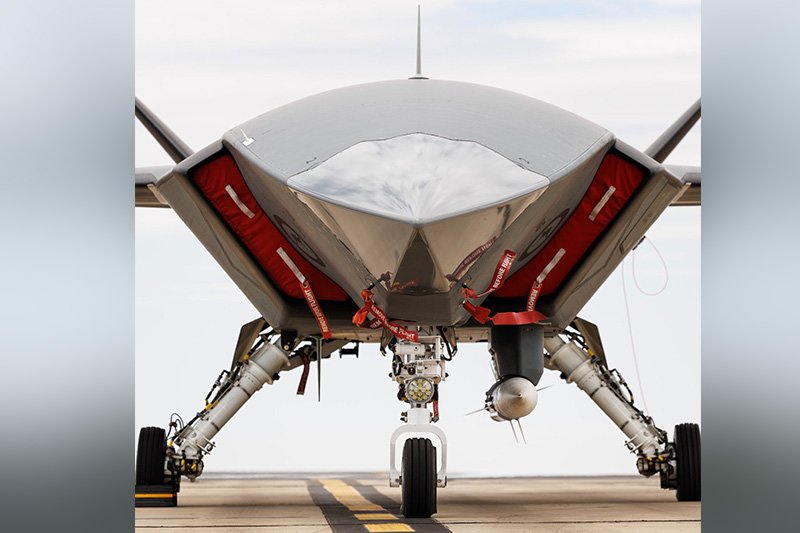
The MQ-28’s modular design philosophy allows for rapid reconfiguration with different sensors, munitions, and mission packages. The entire nose section can be swapped to accommodate various payloads, providing operational flexibility for different mission requirements.
Advanced Sensor Integration and Target Tracking
Photos from the trial reveal a prominent radome with distinctive serrated edges on the Ghost Bat, indicating radar capability. While some MQ-28 variants have been observed with infrared search and track sensors—believed to be Selex systems—in the nose, this particular aircraft did not display that configuration during the weapons test.
The precise method of target acquisition and tracking remains undisclosed. However, the involvement of the E-7A Wedgetail suggests the drone may have received targeting data via datalink from the airborne early warning platform’s powerful radar systems.
Previous collaborative exercises between Boeing and the RAAF have already demonstrated multi-aircraft coordination capabilities. Recent tests have successfully shown the Wedgetail controlling two physical MQ-28s simultaneously with a virtual drone in the airspace, all while tracking target aircraft.
Australia Commits $930 Million to Drone Development
Coinciding with the successful weapons test, the Australian government announced a substantial investment of approximately $930 million in collaborative air capabilities. This funding package includes contracts with Boeing Defense Australia for six operational Block 2 MQ-28A aircraft and development of an enhanced Block 3 prototype.
Australia has already acquired eight pre-production Ghost Bat drones, designated as Block 1 aircraft. The new Block 2 variants represent a pathway toward operational capability, though specific timelines for full deployment remain unannounced.
According to Australian Minister for Defense Industry Pat Conroy, the Ghost Bat fundamentally changes air combat dynamics by transforming a single fighter jet into a coordinated team capable of both reconnaissance and direct engagement, while providing crucial protection for human aircrew.
Building Toward Operational Combat Capability
The latest contracts aim to establish the foundation for an operational Air Combat Platform capability within the Royal Australian Air Force. The enhanced Block 3 prototype may incorporate internal weapons storage, which would preserve the aircraft’s low-observable design during combat missions—a crucial advantage in contested airspace.
This investment represents just one component of Australia’s broader unmanned systems strategy. Under the 2024 National Defense Strategy, the government plans to invest more than $6.6 billion in various drone platforms over the next decade, with at least $2.8 billion dedicated specifically to uncrewed aerial systems.
Global Interest & Export Potential
Beyond Australian defense requirements, Boeing has identified potential international customers for the Ghost Bat, including the U.S. Navy and Poland. The MQ-28 holds unique advantages in the export market as the most mature Western-designed Collaborative Combat Aircraft currently available, while facing fewer U.S. export restrictions compared to American-developed systems.
Although Boeing was not selected to continue in the U.S. Air Force’s Collaborative Combat Aircraft Increment 1 program, the company remains positioned to compete in future development cycles. The Air Force has previously utilized Ghost Bat aircraft to support CCA-related testing, and the program’s iterative structure allows for new competitors in subsequent increments.
Advancing Unmanned Combat Aviation
The successful AMRAAM launch positions the Ghost Bat among a select group of unmanned platforms capable of air-to-air combat. Turkiye’s Kizilelma drone previously achieved a similar milestone using domestically-produced Gökdoğan missiles, highlighting the rapid global advancement in autonomous combat aircraft technology.
Also Read this: Turkiye’s Kizilelma Makes History with Successful Air-to-Air Capability Test
As the MQ-28 program continues development, this weapons test demonstrates tangible progress toward creating combat-ready loyal wingman systems that can operate alongside crewed aircraft in complex, contested environments. The combination of advanced sensors, modular design, and proven weapons integration establishes the Ghost Bat as a leading platform in the emerging collaborative combat aircraft category.
The Royal Australian Air Force’s commitment to fielding operational Ghost Bat capabilities reflects a broader shift in military aviation toward mixed crewed and uncrewed formations, where autonomous systems extend combat reach, provide additional sensor coverage, and absorb risk in high-threat scenarios while human pilots maintain strategic control and decision-making authority.
Keep connected with us at Facebook, Twitter, YouTube, Instagram & TikTok for latest defense happening around the globe.
Discover more from International Defence Analysis
Subscribe to get the latest posts sent to your email.