


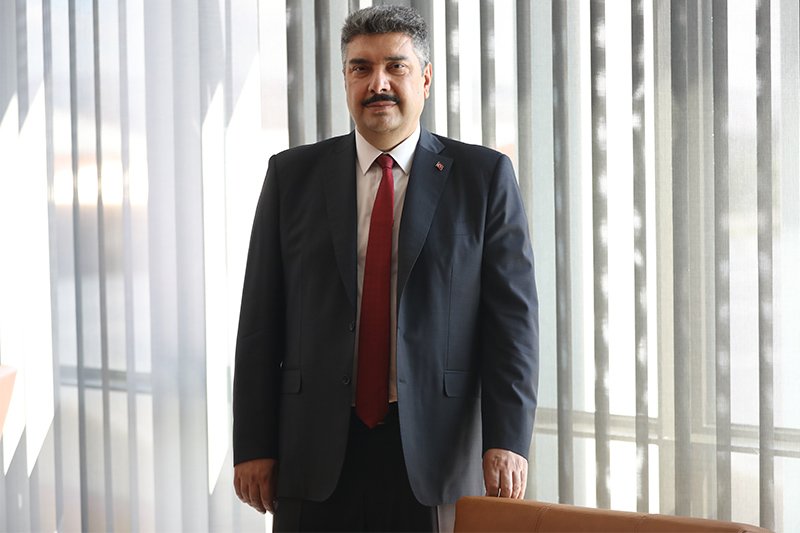
Exclusive Interview with President & CEO HAVELSAN Mr Mehmet Akif NACAR
Founded in 1982, HAVELSAN is one of Türkiye’s leading defence and high-technology companies, developing software-based advanced solutions for the armed forces, public institutions, and the private sector. The company plays a pioneering role in delivering innovative, indigenous, and smart products and services tailored to national and international defence requirements.
Thanks to its broad portfolio including defence technologies, C4ISR, simulation and training systems, autonomous and robotic platforms, information and communication technologies, and cybersecurity, HAVELSAN operates across six continents with its proven products, solutions and systems.
Its position as a strategic and game changing technology partner can be observed through its active presence at major international defence exhibitions, combined with growing global demand reflecting the company’s current momentum and global recognition.
To better understand HAVELSAN today and its outlook for the coming period, we spoke with CEO Mr.Mehmet Akif NACAR.
How does HAVELSAN differentiate itself from competitors in the global defence technologies market?
HAVELSAN is fundamentally a software and systems integration company. Rather than focusing on individual platforms, we develop interoperable and modular architectures that integrate sensors, platforms, command centres, and decision-support layers into a unified operational picture.
Our platform-agnostic solutions allow customers to modernise incrementally without costly system replacements, enabling faster decision-making and operational flexibility.
Equally important is our partnership approach. Particularly in the Middle East, Africa, and Asia, we work closely with local players, positioning ourselves not as a supplier but as a long-term technology partner. Localisation, technology transfer, and joint capability development are central to our sustainable relationships.
What are HAVELSAN’s priority technology areas, and how do these technologies respond to emerging operational needs?
Rather than prioritising a single technology domain, we evaluate operational needs holistically when defining our technology priorities. HAVELSAN’s approach is built on ensuring that critical functions—such as command and control, decision-making, training, and operational preparedness—operate in an integrated and coherent manner.
Within this structure, software and systems integration capabilities form our core foundation. Our solutions focus on sensor data fusion, the creation of a shared operational picture across multiple platforms, and decision-support mechanisms that enhance operational effectiveness. This enables us to deliver flexible solutions adaptable to different force structures and mission profiles.
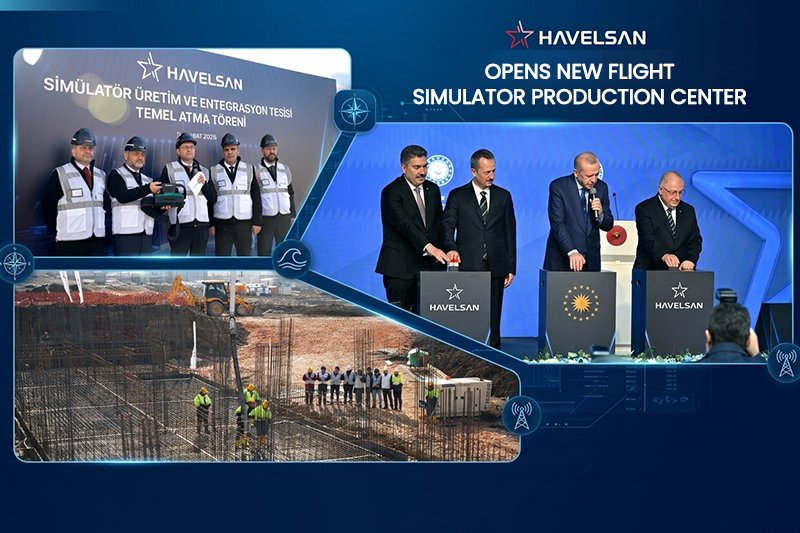
Simulation and training are also among HAVELSAN’s core fields of activity. We consider training not as a supporting function, but as a direct operational capability. Through simulation-based environments, forces can assess readiness, rehearse complex scenarios, and enhance performance in risk-free settings.
All these capabilities are developed on flexible and sustainable architectures designed to meet current requirements while remaining adaptable to future operational environments. Within this framework, artificial intelligence is positioned as a decision-support enabler that enhances situational awareness and supports human operators rather than replacing them.
What is HAVELSAN’s strategy for integrating unmanned and autonomous systems across air, land, and maritime domains?
“Our approach in this area is built around the concept we define as “Digital Troops.” We do not consider unmanned and autonomous systems as standalone platforms, but as digitally interconnected components of a broader operational architecture.”Mehmet Akif NACAR
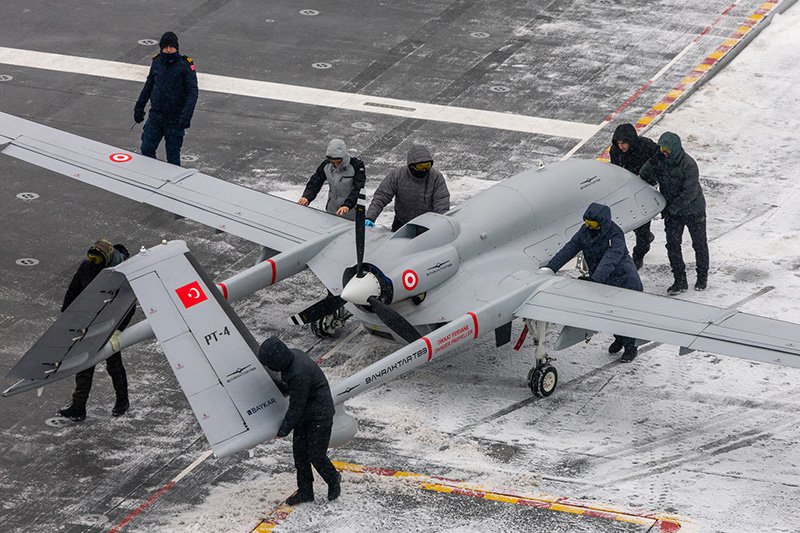
Each of the air, land, and maritime domains has its own specific mission requirements. However, effectiveness is achieved through shared data, shared situational awareness, and coordinated decision-making across these domains. Swarm capabilities and joint missions play a critical role in this context.
Compatibility with existing platforms is also a key element of our strategy. For example, through our expertise and deep technological capability in network centered C4I systems, autonomous systems can be integrated into existing command-and-control structures. This provides customers with the ability to expand their capabilities in a gradual and controlled manner.
How does HAVELSAN ensure compliance with NATO standards while maintaining flexibility for non-NATO customers?
Interoperability has never been an add-on feature for us; it has always been a fundamental design principle. Our system architectures are developed in compliance with NATO standards and STANAG requirements. The experience we have gained through NATO projects and exercises has also played an important role in reinforcing this approach.
At the same time, we are aware that not all customers operate within a NATO framework. Thanks to our modular and layered software architectures, we can preserve NATO compliance while adapting interfaces and operational logic for non-NATO users.
How does HAVELSAN address customers’ defence modernisation needs?
HAVELSAN does not approach modernisation as a conventional product sale. We view it as a transformation partnership based on close collaboration and shared understanding.
Modernisation is not only about meeting today’s operational needs, but also about building resilient structures capable of responding to future uncertainties. Through our expertise in software-oriented technologies, data management, and systems integration, we deliver tailored solutions adapted to different geographies, threat environments, and institutional requirements.
While threat perceptions may vary across regions, fundamental needs such as integration, effective decision-making, and long-term sustainability remain largely common. Our role is to transform these shared needs into flexible and future-proof defence architectures.
Where do you see HAVELSAN in the global defence market by 2030, and which milestones are critical to achieving this vision?
By 2030, I believe HAVELSAN will not merely aim to become a globally recognised defence technologies brand; rather, we will elevate today’s already strong level of international recognition to a significantly higher position. We expect to expand our presence across many more countries, develop some of the most advanced technologies in our fields, and strengthen our role as one of the leading global players in entirety of our business areas.
Establishing a sustained presence in selected geographies and remaining close to the operational field through local offices and long-term partnerships are among our key priorities. Proximity to the customer is essential not only from a commercial perspective, but also for gaining deep operational insight.
Increasing our role in NATO and allied projects, becoming a reference company in AI-enabled and autonomous solutions, and continuing strong investments in human capital and R&D form the cornerstones of this vision. Our ultimate objective is to achieve a global positioning built on trust, technological leadership, and long term sustainability.
Read More interviews


Keep connected with us at Facebook, Twitter, YouTube, Instagram & TikTok for latest defense happening around the globe.
Discover more from International Defence Analysis
Subscribe to get the latest posts sent to your email.