



West Asian War: Strategic Lessons for Pakistan
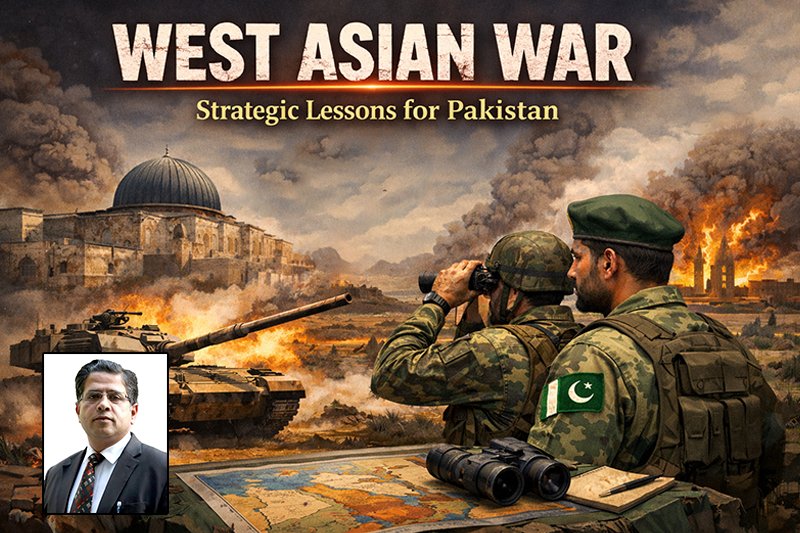
The confrontation in West Asia involving Iran, Israel, and the United States has emerged as one of the most significant demonstrations of 21st-century warfare. Unlike traditional wars dominated by large-scale ground offensives and armoured formations, this conflict has unfolded across multiple domains—missiles, drones (particularly kamikaze or loitering or suicidal drone systems), airpower, cyber and satellite operations, electronic warfare (EW), and signal intelligence (SIGINT). For military strategists, it serves as a real-time laboratory illustrating, how future wars are likely to be fought.
For Pakistan, the conflict holds particular relevance. Its strategic outlook, shaped by enduring rivalry with India, demands close examination of such technologically intensive warfare. The operational patterns observed, offer critical insights into how future conflicts in South Asia may evolve. By studying both the successes and vulnerabilities revealed in this West Asian confrontation, Pakistan can strengthen its defence posture, strategic resilience, and national preparedness.
1. Air Superiority: The Decisive Domain
A central lesson from the conflict is the decisive importance of air superiority. The United States and Israel achieved dominance largely due to the relative limitations of the Iranian Air Force (IAF), enabling early degradation of radar networks, air-defence systems, and command nodes. Once suppressed, their aircraft operated with greater freedom, executing precision strikes on strategic targets.
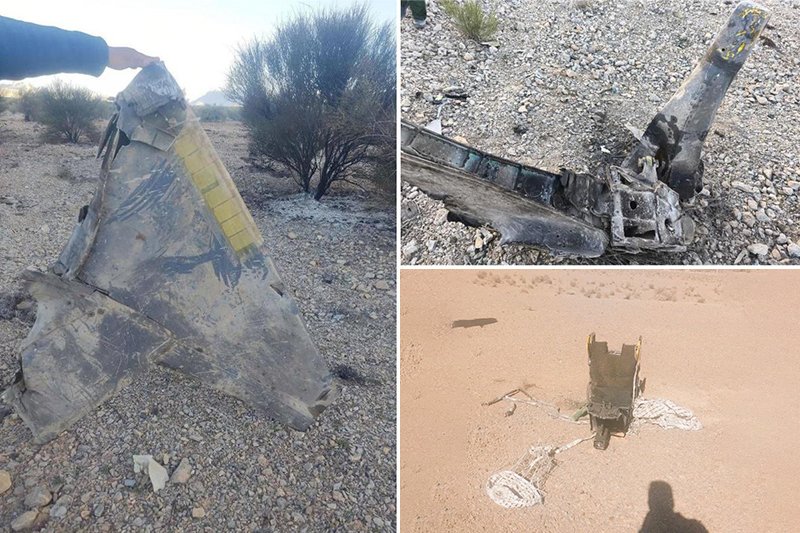
However, Iranian air defences – both active and passive (mainly heat seeking or Infrared systems particularly Majid, AD-08) – along with missile systems, still demonstrated resilience, reportedly engaging and damaging high-value assets. This highlights that even weaker air forces can impose costs if supported by layered defences.
For Pakistan, control of the air domain remains fundamental. This was evident during Operation Swift Retort (2019) and subsequent engagements, where the Pakistan Air Force (PAF) maintained operational initiative through superior planning and coordination. These experiences reinforce that air superiority is not merely about numerical strength, but about integrated sensors, training, electronic warfare, network-centric operations, leadership role and tech employment.
To sustain this edge, Pakistan must continue modernisation through indigenous fighter programmes such as the PFX initiative, potential expansion of J-10C fleet, and induction of fifth-generation platforms like the J-35A. Advanced airborne early-warning systems, EW assets (Including HAVA Stand-Off Jammers), and integrated command networks will be essential to deny adversary dominance in high-intensity conflict.
2. Missile and Drone Warfare: The New Operational Core
The conflict underscores the centrality of missiles and drones in modern warfare. Iran’s reliance on asymmetric capabilities – hypersonic and supersonic ballistic and cruise missiles, alongside UAVs and loitering munitions, demonstrates the effectiveness of layered and long-range strike options.
Systems such as medium-range ballistic missiles (e.g., Emad and Ghadr variants), and newer long range manoeuvrable hypersonic and near hypersonic systems like Fateh, Kheibar Shekan, Khorramshahr and Sejjil highlighted improved survivability, rapid launch capability, and growing precision. Similarly, cruise missiles like Soumar and Paveh, designed for low-altitude flight, present significant interception challenges.
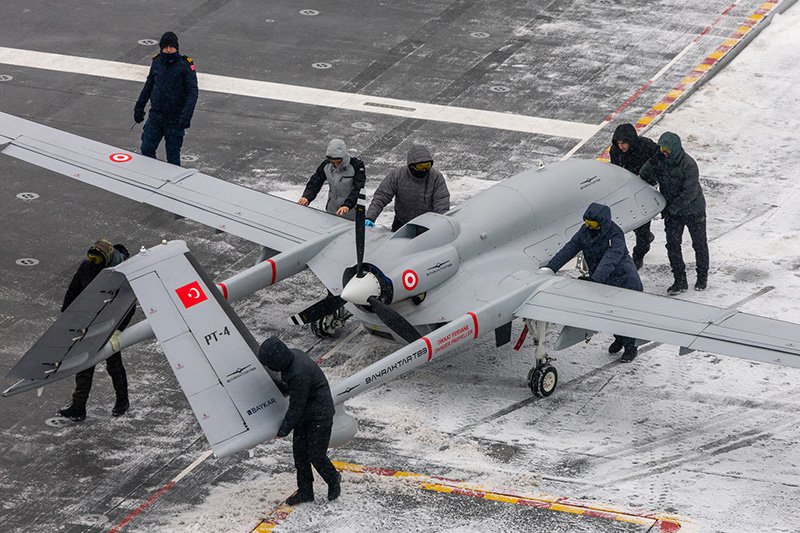
Drone warfare has proven particularly transformative. Loitering munitions and swarm drones can overwhelm air defences, exhaust costly interceptors, and create openings for follow-on air strikes. This trend has been evident not only in West Asia but also in the Russia–Ukraine war and May 2025 South Asian tensions.
For Pakistan, these developments, combined with India’s expanding missile arsenal, including supersonic and emerging hypersonic systems, necessitate strengthening its conventional strike capabilities. This includes expanding and induction of missile inventories across supersonic, quasi-ballistic, and hypersonic categories (exceeding Mach-5 to Mach-10+, vital to hit adversaries strategically important targets within no time) especially into Pakistan Army Rocket Force (PARF), alongside large-scale induction of swarm drones and loitering munitions into tri-services. In this context, the evolution of the PARF is critical by integrating long-range precision strike systems within a network-centric framework.
Pakistan can enhance its ability to conduct deep and rapid strikes. Such capabilities strengthen conventional deterrence while providing flexible response options below the nuclear threshold.
3. Multi-Layered Air Defence: Building a National Shield
The conflict also highlights the importance (and limitations) of multi-layered air-defence systems in Israel’s architecture, and also across Gulf regions, designed to intercept threats across different ranges, demonstrates the value of layered defence but largely failed and even demonstrates that even advanced systems can be penetrated through saturation attacks involving missiles and drones.
For Pakistan, the lesson is clear: air defence must be integrated, layered, and networked. Long, medium, and short-range systems must operate in coordination with radar networks, EW assets, and satellite-based surveillance under a unified command structure, while it’s critically vital to intercept supersonic and hypersonic weapons as these weapons pose a significant defensive challenge for Pakistan, due to their speed and manoeuvrability, necessitating future investments in advanced detection and interception systems.
Efforts to strengthen this domain, including the induction of advanced systems such as HQ-19 and indigenous solutions like FAAZ-SL, are steps in the right direction but needs more focused approach in the context of West Asian conflict, but with emphasis must remain on integration and real-time coordination rather than standalone capabilities.
4. Space, Cyber, EW and Artificial Intelligence: The Invisible Battlefield
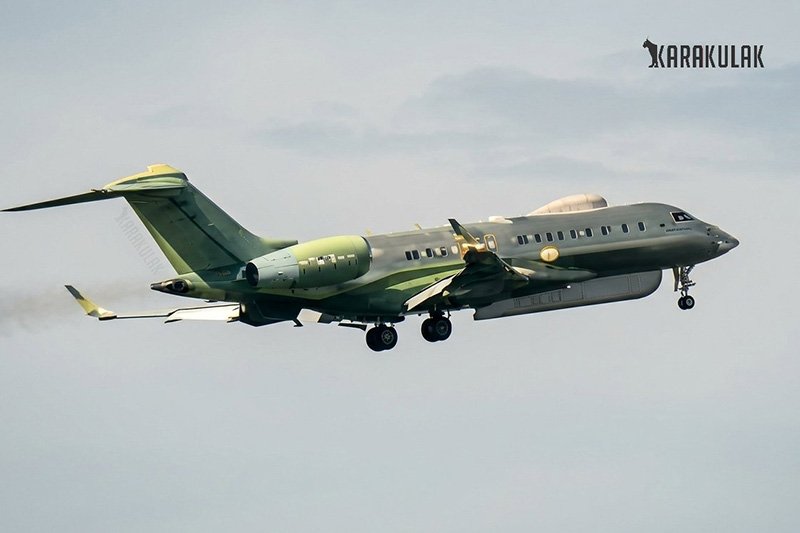
Modern warfare is increasingly shaped by non-kinetic domains. The West Asian conflict demonstrates the critical role of satellite communications, cyber capabilities, EW, SIGINT, and artificial intelligence (AI).
Secure satellite networks enable real-time coordination across dispersed forces, enhancing situational awareness and precision targeting. For Pakistan, leveraging and developing indigenous satellite constilation, will be vital for strategic autonomy.
Electronic warfare has emerged as a decisive tool for jamming radars, disrupting communications, and degrading precision weapons. When integrated with cyber operations, it can disable command networks and create operational confusion. AI further enhances these capabilities by enabling rapid threat detection, automated responses, and adaptive spectrum management.
Similarly, Signal Intelligence (SIGINT) plays a crucial role in intercepting communications, identifying radar emissions, and locating targets. AI-driven analytics allow faster processing of vast data streams, enabling near real-time decision-making.
Control of the electromagnetic spectrum, therefore, has become as critical as control of land, air, or sea domains and PAF mastered it in Marka-e-Haq with ultimate precion, that’s the key to futuristic warfare scenarios.
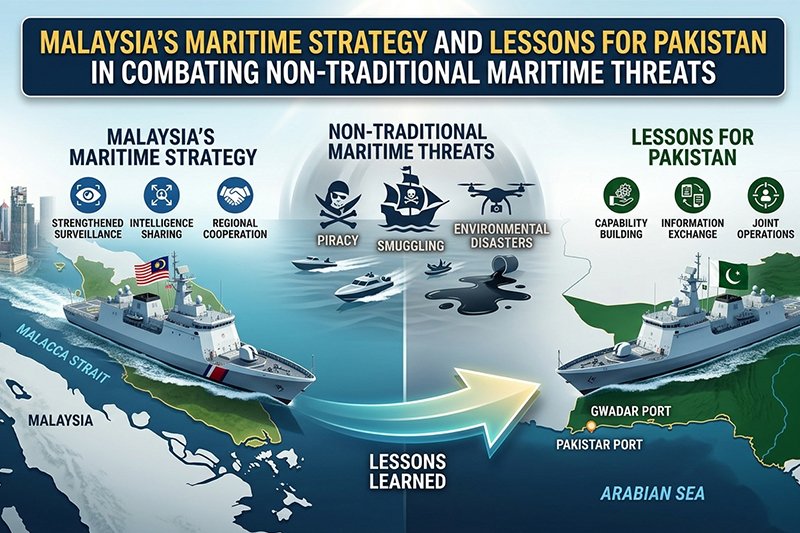
Read This: Malaysia’s Maritime Strategy and Lessons for Pakistan in Combating Non-Traditional Maritime Threats
5. Underground Infrastructure and Strategic Resilience
The conflict reinforces the importance of extra-hardened underground infrastructure as precision weapons and bunker-busting munitions have made surface-level military installations increasingly vulnerable.
Countries facing technologically advanced adversaries have responded by investing in deep underground facilities like Iran. For Pakistan, this approach is particularly relevant given India’s evolving strike capabilities, including developments related to Agni-class system as bunker buster missiles.
Critical infrastructure should include underground missile storage and launch facilities, hardened UAV and aircraft shelters, protected command and control centres, and secure communication networks. Defence production facilities, as well as key energy and logistics nodes, should also be partially relocated underground to ensure survivability.
Beyond military considerations, the conflict highlights the importance of economic resilience, particularly energy security. Disruptions in key maritime chokepoints such as the Strait of Hormuz can severely impact global energy markets.
Pakistan must therefore expand strategic petroleum reserves, diversify energy imports, and accelerate investment in renewable energy sources such as solar and wind. Ensuring food and water security during prolonged conflict is equally essential for national stability. And, if possible hardened underground infrastructure must include provisions of vast energy, food and water storage facilities.
6. Tri-Service Synergy and Network-Centric Warfare
A defining feature of modern warfare is the shift towards network-centric operations (unlike Iranian Mosaic Doctrine, globally unique in its very nature). Military effectiveness increasingly depends on the integration of sensors, command systems, and strike assets into a unified operational framework.
This “kill chain” enables rapid detection, decision-making, and engagement, significantly reducing response times. Operational superiority is determined by the speed, accuracy, and integration of this process.
For Pakistan, this aligns with ongoing efforts to enhance jointness and inter-service coordination. Moving towards a unified command structure under a Chief of Defence Forces (CDF) headquarters framework can improve strategic coherence and operational efficiency.
Modern conflicts are inherently multi-domain, spanning land, air, sea, cyber, space, and the electromagnetic spectrum. Success depends on seamless coordination across all services, supported by advanced data networks.
The integration of capabilities such as the PARF into this framework strengthens long-range strike options and enhances overall deterrence. Collectively, these developments indicate a transition towards a fully integrated, multi-domain operational doctrine.
Conclusion: Preparing for Future Warfare
The Iran–Israel–US confrontation or West Asian war, offers a clear glimpse into the future of warfare. Precision weapons like super-hypersonic and quasi-ballistic missiles, loitering munitions or Kamikazi drones along with drone swarms, cyber operations, and electronic warfare are redefining the battlefield.
The lessons for Pakistan, out of West Asian war, are both strategic and structural. Strengthening airpower, expanding missile (especially supersonic and hypersonic arsenal) and drone capabilities, investing in hypersonic defence, enhancing space and cyber domains, and building integrated, network-centric forces are all essential for national defence.
Equally important is resilience—through hardened underground infrastructure, secure supply chains, and energy and food security.
Ultimately, modern warfare demands a combination of technological capability, strategic foresight, and national resilience. As Pakistan adapts to an evolving regional environment, particularly in the context of its rivalry with India, the lessons from the West Asian conflict provide a critical roadmap for preparing for the wars of tomorrow.
Faisal Raza Khan is a senior, award-winning journalist and former anchor at PTV World (Pakistan TV), specialising in defence tech, national security and strategic foresight. He tweets @frkjournalist and can be contacted at faisalrkmedia@gmail.com.
Credit – iscesthinktank.org, Pakistan’s emerging think tank.
Catch all the latest defense news from around the world—join us on Facebook, Twitter, YouTube, Instagram & TikTok.
Discover more from International Defence Analysis
Subscribe to get the latest posts sent to your email.