





USAF F-15 Strike Eagle Shot Down in Iran
Breaking developments out of the Middle East on Friday, April 3, 2026. Iran claims it has shot down a U.S. Air Force F-15E Strike Eagle over its territory, and early evidence is beginning to support at least part of that claim. Wreckage photographs have surfaced, a search-and-rescue mission appears to be underway inside Iranian airspace, and the Pentagon has yet to issue a formal response. Here is everything confirmed, disputed, and still unknown as of this writing.
What Iran Is Claiming and Where the Story Gets Complicated
Iran’s Khatam al-Anbiya headquarters announced that its forces brought down an American F-15 over Markazi Province in central Iran, warning that the pilot had little chance of survival.
But almost immediately, the story became more tangled. Iranian state media initially identified the downed aircraft as an F-35 a single-seat stealth fighter. That claim did not hold up for long.
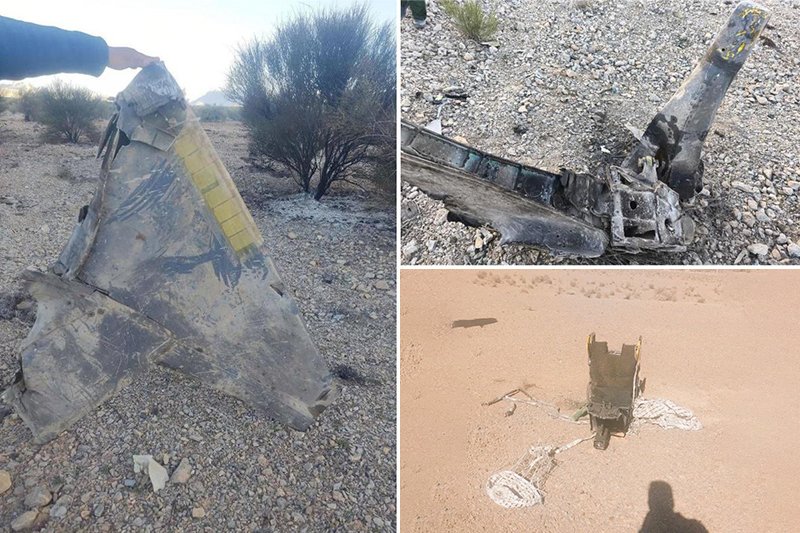
Analysis of the released footage and debris images does not match the design profile of an F-35. Instead, the visible components line up far more closely with the F-15E Strike Eagle a two-seat aircraft that carries both a pilot and a weapon systems officer. That distinction matters enormously, both for accuracy and for understanding the potential human cost of this incident.
So why did Iran claim an F-35 in the first place? Claiming to destroy America’s most advanced stealth fighter carries far greater symbolic and propaganda value than acknowledging the loss of a conventional strike aircraft even one as capable as the F-15E. It is a pattern consistent with how Iranian state media has managed information throughout this conflict.
The Wreckage Photos: What Analysts Are Seeing
Images circulating online show debris that includes what appears to be a vertical stabilizer, wingtip fragments, and scorched wreckage at an alleged crash site. Some reports also describe an impact crater at the scene, suggesting the aircraft hit the ground at high speed before exploding.
The tail markings visible in the photos are particularly significant. The red band and unit markings on the stabilizer correspond closely with aircraft assigned to the 494th Fighter Squadron the “Panthers” based at RAF Lakenheath in the United Kingdom. Side-by-side comparisons with known photos of Lakenheath-based F-15Es show near-identical layout, color tone, and typography on the tail section.
The 494th Fighter Squadron is one of the units confirmed to have deployed to the U.S. Central Command area of operations for Operation Epic Fury, flying from a forward operating base widely assessed to be Muwaffaq Salti Air Base in Jordan.
Are the Photos Authentic?
That remains an open question. Iranian sources have circulated a significant volume of fake and AI-generated imagery since the start of Operation Epic Fury, so skepticism is warranted. However, open-source analysts have noted that the current photos do not show obvious signs of manipulation. There is also an ironic indicator of authenticity: if Iran had staged the wreckage, they almost certainly would have made sure the debris matched the F-35 they claimed to have shot down not an F-15E.
A Second Claim: The Qeshm Island Incident
Today’s central Iran claim is not the only Iranian shootdown allegation of the day. Earlier, the IRGC released separate footage claiming it downed a U.S. F-15 near Qeshm Island in the Strait of Hormuz, attributing the kill to an advanced naval air defense system. The video shows an aircraft maneuvering and deploying flares, captured through a ground-based infrared tracking system.
Whether the two incidents are connected or entirely separate engagements is still unclear. The reported locations are hundreds of miles apart, and the air defense systems Iran credits in each case are different. It remains possible that both claims refer to the same aircraft, or that one or both are exaggerated or fabricated.
Axios Confirms: Search and Rescue Is Underway
Perhaps the most significant development of the day came through independent reporting. Two sources familiar with the incident confirmed that Iran did shoot down a U.S. fighter jet and that a search-and-rescue operation is actively underway to locate two crew members. The U.S. military and the White House had not responded to requests for comment at the time of that report.
The reference to two crew members once again points directly to an F-15E, not the single-seat F-35 Iran initially claimed.
HH-60s & an HC-130J Spotted Over Iran
Videos purportedly filmed inside Iran show a pair of HH-60 helicopters taking turns refueling from what appears to be an HC-130J Combat King II aircraft. This is the standard U.S. Air Force combat search-and-rescue configuration pave Hawk helicopters handle crew extraction while the HC-130J provides airborne command, communications, and refueling. Highly trained pararescuemen, known as PJs, would typically accompany such a mission on the ground.
Iranian state broadcaster IRIB reported something striking from inside the country: civilians from southwestern Iran reportedly drove to the area near the crash site in private cars. Iranian armed forces publicly called on the population not to harm the pilot an unusual public message that itself suggests a crew member may be unaccounted for on the ground.
The Bigger Picture: F-15E Losses Are Mounting
If today’s incident is confirmed, it would be the fourth F-15E Strike Eagle lost by the U.S. Air Force since Operation Epic Fury began and the first brought down by enemy fire over Iranian territory.
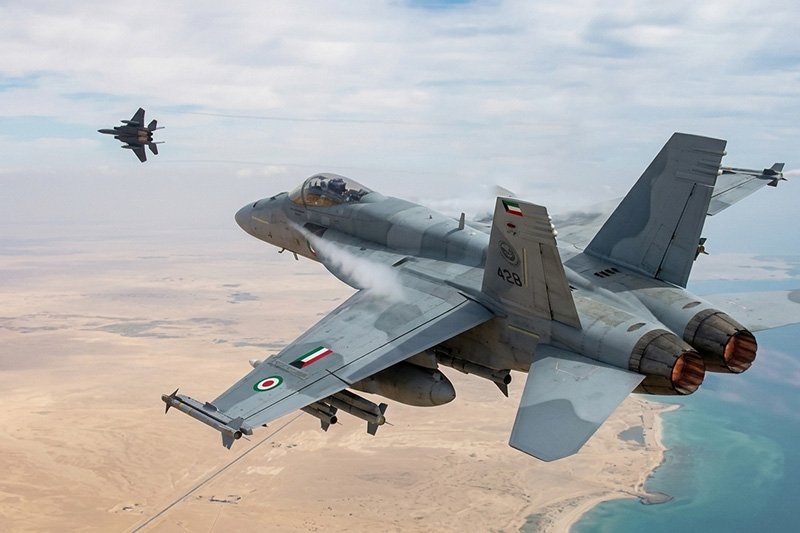
Read This: Kuwaiti F/A-18 Hornet shoots down F-15E Strike Eagles
The most dramatic prior loss occurred on March 2, 2026, when three F-15Es returning from a combat mission were shot down over Kuwait in an apparent friendly fire incident. Kuwaiti air defense systems misidentified the returning American jets during an active Iranian missile and drone attack. All six crew members ejected safely and were recovered in stable condition.
Overall U.S. aircraft losses and battle damage since the start of Epic Fury have reportedly reached close to twenty platforms across all categories including drones, helicopters, and multiple fixed-wing combat aircraft.
Why Iran Keeps Claiming F-35 Kills
There is a clear strategic logic behind Iran’s repeated habit of labeling downed aircraft as F-35s. Destroying a conventional strike aircraft like the F-15E highlights the operational risks facing any non-stealth platform flying over defended airspace. Destroying an F-35, on the other hand, would undermine global confidence in low-observable technology and deliver a far more damaging blow to American air power credibility.
The F-35 is the centerpiece of U.S. and allied tactical aviation. Claiming to shoot one down even falsely generates headlines, boosts domestic morale, and plants seeds of doubt internationally. It is a messaging strategy, not just a battlefield claim.
Bottom Line
If confirmed, a U.S. F-15E going down inside Iranian territory by enemy fire would mark a significant escalation and a historic moment in the ongoing conflict. The wreckage photos appear credible, independent sourcing has confirmed a shootdown and an active rescue operation, and the U.S. military has not denied it as of publication.
What is still murky is the fate of the two crew members, the outcome of the rescue effort, and the full sequence of events that led an aircraft from RAF Lakenheath to come down over Iranian soil.
This story is developing rapidly. We will update as new information becomes available.
This report is based on open-source imagery, independent reporting, and OSINT community analysis current as of April 3, 2026. All unverified Iranian government claims are treated as unconfirmed pending independent confirmation.
Catch all the latest defense news from around the world—join us on Facebook, Twitter, YouTube, Instagram & TikTok.
Discover more from International Defence Analysis
Subscribe to get the latest posts sent to your email.