



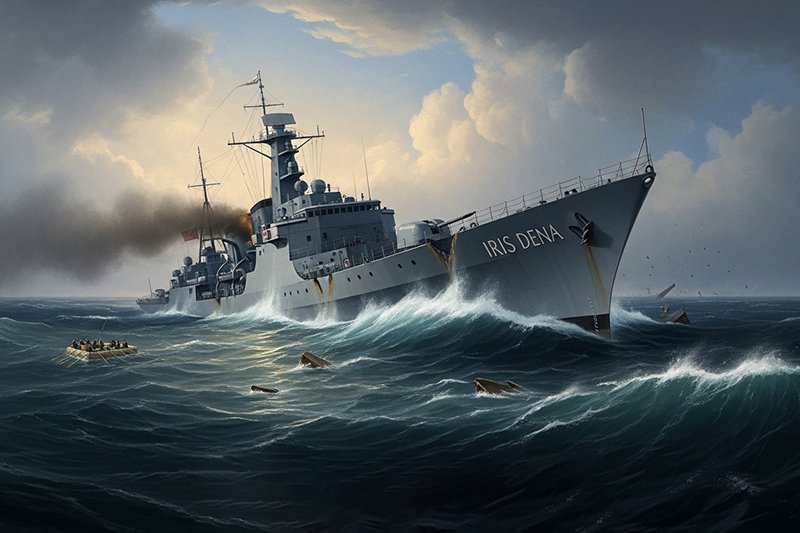
Rebuttal – The sinking of IRIS Dena: A quiet death of the rules-based order
In prevalent times of instability, active conflict and War in Middle East, focus has been instinctively on maritime. Yet everyone wants to read and study anything and everything about on ongoing Naval Battle, Sea and Straits of Hormuz. It is also understood that public demands to read only brutal critique of the powerful.
So, there has been dearth of professional writings since it’s a unique, complex and intervening subject which is completely different to Land or Air Warfare. The test case being India which is getting too much flak due Iranian ship being targeted that too in EEZ of Sri Lanka. This obviously creates a lot of chatter albeit highly unprofessional. Under this scenario, Reputable paper like Dawn News of Pakistan recently published an unprofessional article; speaks of complexity of Maritime Domain, the lack of professional knowledge of the Author on Maritime Security and interpretation of International Law. With this pretext, I would like to append following points in rebuttal to the above-mentioned article.
- Author’s understanding of High Seas, International Waters, Territorial Waters & Neutral waters is vague. That’s why he couldn’t able to understand that the Iranian Warship was not in the neutral waters and instead was in International Waters. No treaty restricts any belligerent of the War to undertake any offensive against opposing force in the International Waters. Also in International Waters & High Seas, there is no need of any notification. It is the case of neutral waters (Territorial Waters of a Neutral Country) wherein aggressor needs to notify the Neutral State for carrying out attack on its opposing force. When Iranian Warship left Indian & Sri Lankan territorial waters; there had been no restrictions whatsoever on USN.
- Concept of War Theater is a land warfare term. In the past, Naval Forces used maritime exclusion zone for the safety of neutral shipping but Exclusion Zone is not relevant to belligerents. American didn’t even announce any Exclusion Zone till to date.
- Every Warship keeps some “War Package/ Allowance” of Ammunition & Ordinance with it. So, Warship doesn’t supposed to transit without War time bare minimum storage. Author’s usage of term Unarmed for a Warship is not correct.
- In case of Search & Rescue, Submarines are not expected to conduct such operations. Submarines are supposed to leave the position ASAP while remaining discreet. It’s the responsibility of nearest Naval Ships of any Country and the Sri Lanka did the job marvelously well in this very case. Last submarine that conducted rescue operations, was in famous Laconia Incident 1942. A German U-boat sank a ship, then the same submarine rescued survivors, flew a Red Cross flag and broadcast its position openly asking everyone including the enemy to come help. However, a U.S bomber spotted and targeted it. So, it had to abandon the operation.
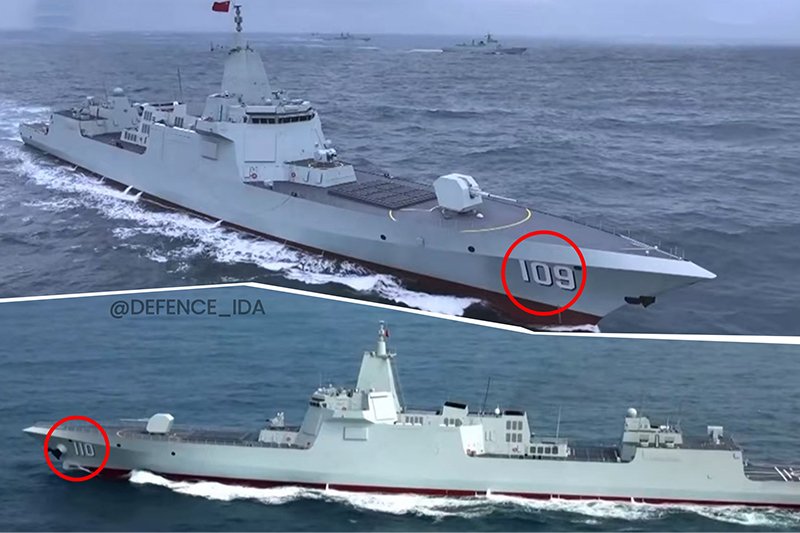
Also Read: China’s Type 055 Destroyers Hull 109 and 110 Make Official Debut
Afterwards, Admiral Karl Dönitz (Famous German Navy Commander) issued the “Laconia Order”, forbidding U-boats from attempting to rescue survivors of sunken ships. German U-boat tried to rescue around 1700 Italian POW, carried by British Troopship, a built-in merchant Ship. Being ally, German felt duty-bound to rescue Italian POWs, a blunder indeed. Otherwise, it was unwarranted risky operation.
Actually, Submarines don’t have speed advantage. It’s difficult for a Submarine to survive against contemporary Hi-Tech Space based surveillance & precise Missiles, Drones & Torpedoes attacks. During U-boat campaign (1940-45); Anti-Submarine Warfare (ASW) was not so advance, the reason why U-boats dominated the entire Atlantic theatre for years. Post WW-2, we don’t find any example of Submarine rescuing any platform during War.
In conclusion, while acknowledging the atrocities and cruel brutality of the Powerful States against the Iran; I would leave the question for the readers that if any particular incident of an ongoing Naval War is not violating any International treaty or norm; how it can be contributing to the quiet death of International rule-based order.
Ali Irfan – Author is a PHD Scholar of International Relations at NUML. His areas of interest are Foreign Policy, Military Strategy, Niche and Emerging Disruptive Technologies, Maritime Security and International Maritime Law.
Catch all the latest defense news from around the world—join us on Facebook, Twitter, YouTube, Instagram & TikTok.
Discover more from International Defence Analysis
Subscribe to get the latest posts sent to your email.